
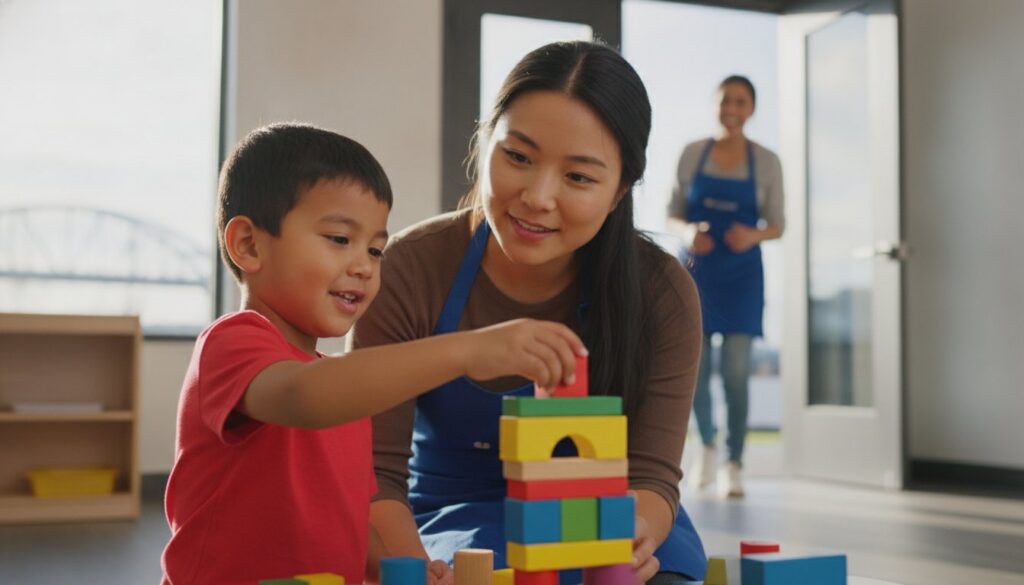
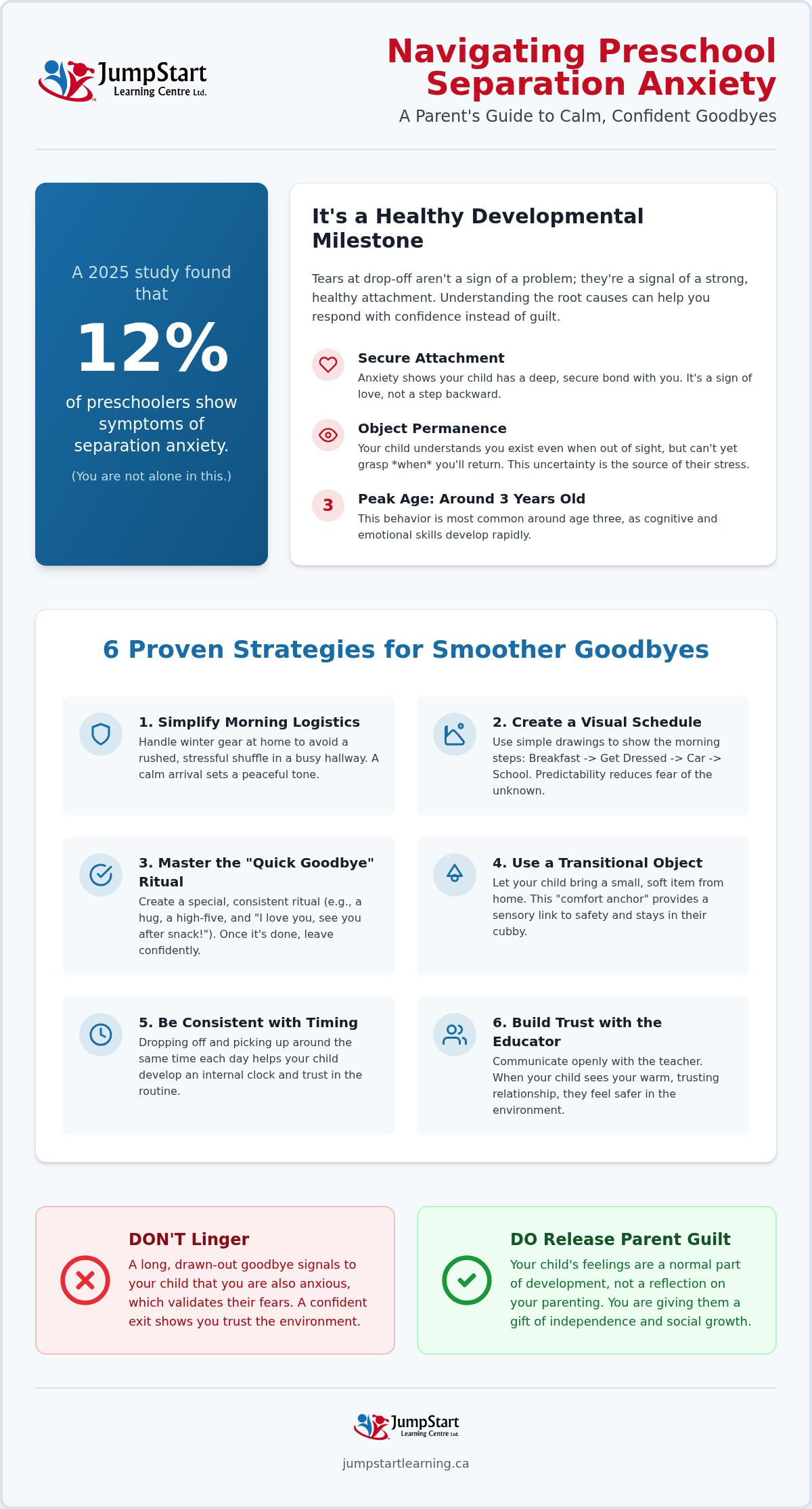
Imagine standing in the hallway of an Edmonton learning centre while your child clings to your coat, tears streaming down their face as you try to say goodbye. It’s a heartbreaking scene that leaves many parents feeling guilty, exhausted, and deeply worried about their child’s social-emotional development. If you are searching for preschool separation anxiety tips Edmonton families can actually use, you aren’t alone in this struggle. A 2025 study found that separation anxiety symptoms were detected in 12% of preschool children, proving that these difficult mornings are a common hurdle in the journey toward independence.
We understand that you want your child to feel safe and excited about their new environment rather than overwhelmed by it. It’s natural to feel judged or anxious when drop-offs don’t go as planned, but there’s a clear path toward calmer routines. This guide provides empathetic, research-backed strategies to help your child transition into preschool with confidence and joy. We will explore how predictable structures and a “play with purpose” philosophy can transform your morning goodbyes from a source of stress into a moment of genuine connection and growth.
Key Takeaways
- Recognize that separation anxiety is a healthy developmental milestone rooted in attachment and your child’s growing understanding of object permanence.
- Simplify your routine by managing winter gear early; this ensures your morning stays focused on connection rather than a rushed exit.
- Master the “Quick Goodbye” ritual to provide your child with a predictable, loving exit strategy that significantly reduces morning uncertainty.
- Discover how a structured “Play with Purpose” philosophy uses literacy and numeracy enrichment to build the internal confidence children need to thrive.
- Implement these preschool separation anxiety tips Edmonton parents trust to transform tearful goodbyes into moments of school-day excitement.
Understanding Preschool Separation Anxiety in 2026
Preschool separation anxiety is a natural, healthy transition toward independence that signals a deep and secure attachment between a child and their caregiver. While it often feels like a crisis at the classroom door, it’s actually a significant developmental milestone. Most children experience a peak in this behavior around age three because they’ve mastered the concept of object permanence. They understand that you still exist even when you are out of sight, but they haven’t yet developed a sophisticated internal clock to know exactly when you’ll return. This gap between knowing you’re gone and not knowing when you’ll be back creates the emotional friction we see at drop-off.
If you’ve been searching for preschool separation anxiety tips Edmonton experts recommend, the first step is releasing the “parent guilt” cycle. Your child’s tears aren’t a reflection of your parenting or a sign that they aren’t ready for school; they’re a biological response to change. While most cases are temporary, some children may experience more intense distress. Understanding the foundations of Separation anxiety disorder can help parents distinguish between typical developmental hurdles and situations that might require extra clinical support. Validating your child’s feelings while maintaining a calm, steady presence is the most effective way to help them navigate these big emotions.
Developmental Milestones for Alberta Preschoolers
Social-emotional growth is a core pillar of Alberta’s early learning standards. In our local classrooms, we look for “typical transition jitters,” which usually subside within minutes of a parent leaving. These moments are vital opportunities for children to practice self-regulation. When a child learns to soothe themselves with the help of a trusted teacher, they’re building the internal resilience needed for future academic success. We focus on helping every child reach these milestones at their own pace, ensuring they feel supported throughout the journey.
Why Predictability Matters for 3-Year-Olds
Structure is the most effective tool for lowering a child’s cortisol levels. For a three-year-old, the world can feel chaotic and unpredictable. A structured environment acts as a cognitive roadmap, telling them exactly what comes next. When a child knows that snack time always follows circle time, the fear of the unknown begins to dissipate. This sense of order provides the psychological safety they need to stop worrying about the exit and start focusing on the joy of discovery.
Tips for Easing the Transition at an Edmonton Preschool
Mornings in Alberta often feel like a race against the clock, especially when snowsuits, boots, and frozen windshields are part of the equation. If you’re looking for preschool separation anxiety tips Edmonton parents can apply to their daily lives, start with your morning logistics. Handling the bulk of winter gear at home rather than in a crowded school hallway prevents a frantic, overheated departure. When a child feels rushed or senses your stress during the “gear shuffle,” their own anxiety levels naturally spike. By arriving at the centre calm and ready, you create a peaceful foundation for the final goodbye.
Establishing a “Quick Goodbye” ritual is one of the most effective ways to provide emotional security. This could be a specific secret handshake, a “nose-to-nose” rub, or a consistent phrase like, “I’ll be back after snack time.” Once this ritual is finished, it’s vital to make your exit. To help your child prepare for this cycle before the first day, try practicing at local Edmonton landmarks. Spending twenty minutes at William Hawrelak Park or a local playground where you sit on a nearby bench while they explore helps them internalize the pattern of you stepping away and always returning.
- The Transitional Object: Allow your child to pick a small, soft item that stays in their cubby. This “comfort anchor” provides a sensory link to home.
- Visual Schedules: Use a simple drawing at home to show the steps of the morning, ending with a picture of their preschool.
- Consistent Timing: Try to drop off and pick up at the same time every day to build their internal clock.
The Power of the ‘Short and Sweet’ Goodbye
Lingering at the door often signals to your child that you are also worried, which unintentionally validates their fear. A confident, brief exit shows them that you trust the environment and the people within it. While it’s difficult to walk away when they are crying, remember that our educators are experts at redirecting that energy into engaging activities. Most children settle into play within minutes of a parent’s departure once the “audience” for their big emotions is gone.
Building Trust with Your Child’s Educator
Open communication is the bridge between home and school. We encourage parents to talk about their teachers by name during evening routines to build a sense of familiarity. When your child hears you speak warmly about “Ms. Sarah” or “Mr. David,” they begin to view the educator as a safe extension of their family circle. If you’re ready to see how our supportive team handles these vital transitions, you can explore our enrollment options to find the right fit for your family.
How Jumpstart’s ‘Play with Purpose’ Builds Resilience
Many parents worry that adding academic goals might overwhelm a child who is already struggling with drop-offs. However, structured learning actually acts as a stabilizing force for young minds. By utilizing a “Play with Purpose” philosophy, we provide a clear academic roadmap for the child’s day. This predictable sequence reduces the uncertainty-based stress that often fuels morning tears. When a child knows exactly what to expect from their learning environment, they feel a sense of agency and safety that unstructured play alone cannot provide.
Our literacy and numeracy enrichment programs are designed to do more than just teach letters and numbers; they build a child’s internal self-esteem. As a student masters a new concept, their confidence grows. This internal strength makes them more resilient when faced with the temporary discomfort of saying goodbye. “Academic achievement isn’t just about grades; it’s the fuel that powers a child’s internal sense of ‘I can do this,’ turning classroom anxiety into curious exploration.” These preschool separation anxiety tips Edmonton families find most effective are often those that address the child’s need for competence and success.
We also recognize that every child enters our Preschool Program with a unique emotional temperament. Our educators use personalized learning plans to account for these differences, ensuring that transitions are handled with the specific care your child requires. Whether they need a few extra minutes of one-on-one connection or a specific sensory activity to ground them, Jumpstart Learning Academy acts as your partner in their emotional growth.
Fostering Friendships and Social-Emotional Growth
Peer interaction is a vital tool for helping children realize they aren’t alone in their feelings. When a child sees their friends navigating the same morning transitions, it normalizes the experience and builds empathy. This shared journey is a key component of Fostering Friendships in Preschool, where social bonds help replace anxiety with a sense of belonging.
Preparing for Kindergarten Readiness in Alberta
Mastering the “goodbye” is a significant developmental milestone and the first step in true kindergarten readiness. By supporting the whole child, both intellectually and emotionally, we prepare them for the larger transitions they will face in the future. We encourage you to Enroll at Jumpstart Learning Academy to begin this transformative journey with a team that values your child’s emotional well-being as much as their academic success.
Empowering Your Child for a Confident Start
The journey from tearful goodbyes to a child who runs into the classroom with a smile is a path we walk together. By implementing these preschool separation anxiety tips Edmonton parents have found success with, you’re doing more than just managing a morning routine. You’re giving your child the tools to navigate change and build lasting resilience. We’ve seen how the combination of a consistent ritual and a structured, supportive environment can transform a child’s perspective on school. It’s about moving from the friction of transition toward the joy of discovery.
As a licensed early learning centre in Alberta, we specialize in bridging the gap between home and the classroom. Our research-based “Play with Purpose” curriculum ensures that every child feels secure while they uncover their own capabilities. Our experienced Edmonton educators are dedicated to making every transition a positive experience for both you and your little learner. We understand the weight of your choice, and we’re here to provide the steady, expert guidance your family deserves.
Ready to see your child thrive in a space designed for their emotional and academic growth? Secure Your Child’s Spot for 2026 – Enroll Today and take the first step toward a calmer, more confident school morning. You’ve got this, and we’re here to help every step of the way.
Frequently Asked Questions
How long does preschool separation anxiety usually last?
Most children adjust to their new environment within two to four weeks of consistent attendance. While the intensity varies for every student, the most acute crying usually subsides as the child builds trust with their educators and masters the daily schedule. If you’re consistently following preschool separation anxiety tips Edmonton experts recommend, you’ll likely notice the duration of morning tears shortening each day until they disappear entirely as your child finds their rhythm.
Is it okay to sneak away when my child is distracted?
Sneaking away can actually increase long-term anxiety and damage the foundational trust between you and your child. When they realize you’ve disappeared without a goodbye, it can make them more clingy the next day because they’re afraid to let you out of their sight. It’s much better to have a brief, honest goodbye ritual that reinforces the fact that you are leaving but will definitely return at a specific time.
What should I do if my child starts crying again after weeks of easy drop-offs?
Regression is a normal part of development and often happens after a long weekend, an illness, or minor changes at home. If this occurs, stay calm and return to your established “Quick Goodbye” routine without adding extra drama or lingering at the door. This consistency reminds your child that the school environment is still a safe, predictable place even if they’re feeling a bit more sensitive than usual during this particular week.
Can preschool separation anxiety happen at age 4 or 5?
Children in Junior Kindergarten or Kindergarten programs can still experience these feelings, especially during major transitions or when starting at a new learning centre. Even older children may need a refresher on the preschool separation anxiety tips Edmonton families use to navigate these shifts. At age four or five, you can use more complex conversations to explain the school schedule and validate their feelings while still maintaining firm, loving boundaries during the morning drop-off.
