
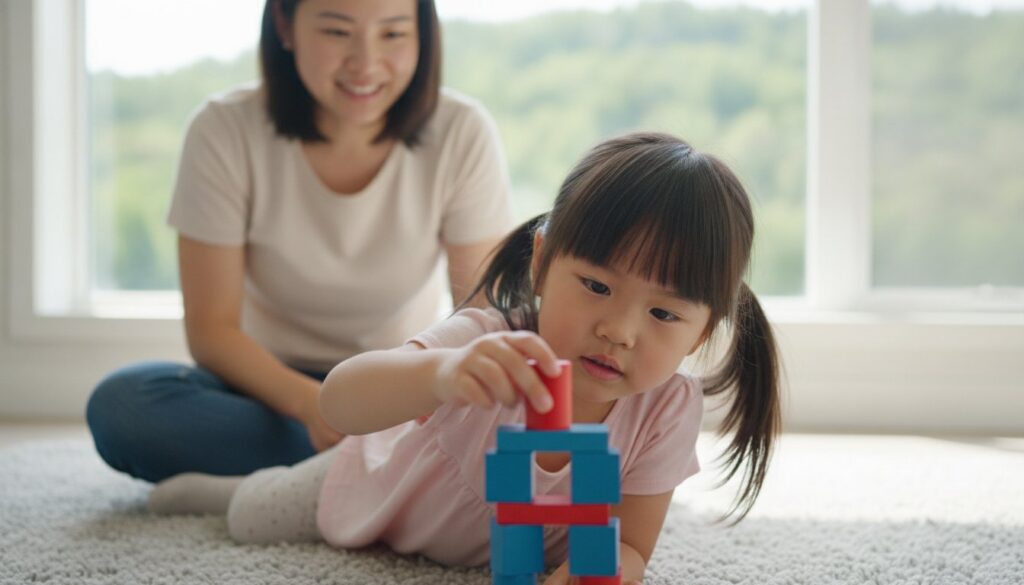
What if the most profound indicators of your child’s school success aren’t found in a formal exam, but in the quiet moments of discovery during their afternoon play? It’s natural to feel a sense of weight as the 2026 school year nears, particularly with Alberta’s mandatory literacy and numeracy screenings creating a new landscape for families. You might worry about your child’s ability to keep pace while assessing kindergarten readiness at home. We understand that this transition feels significant; it’s a journey of uncovering the latent capabilities your child already possesses.
By observing your child through the lens of intentional play, you can replace academic anxiety with a grounded sense of hope. This guide offers a professional yet nurturing look at Alberta’s seven core learning areas, from early literacy to personal responsibility. You’ll gain practical, low-stress methods to evaluate developmental milestones and the confidence to decide if a specialized Kindergarten Program or a foundational Junior Kindergarten year is the right next step. Let’s transform the pressure of “readiness” into a celebration of your child’s individual growth and potential.
Key Takeaways
- Understand why Alberta’s standards prioritize social-emotional regulation and independence as the primary foundations for classroom success.
- Discover a gentle, effective method for assessing kindergarten readiness at home by observing your child’s natural problem-solving through purposeful play.
- Learn how to create a nurturing, low-stress environment that allows your child to demonstrate their true developmental capabilities without the pressure of a formal test.
- Gain a reassuring perspective on identifying learning gaps, viewing them as a “gift of hope” that allows for early, personalized support and enrichment.
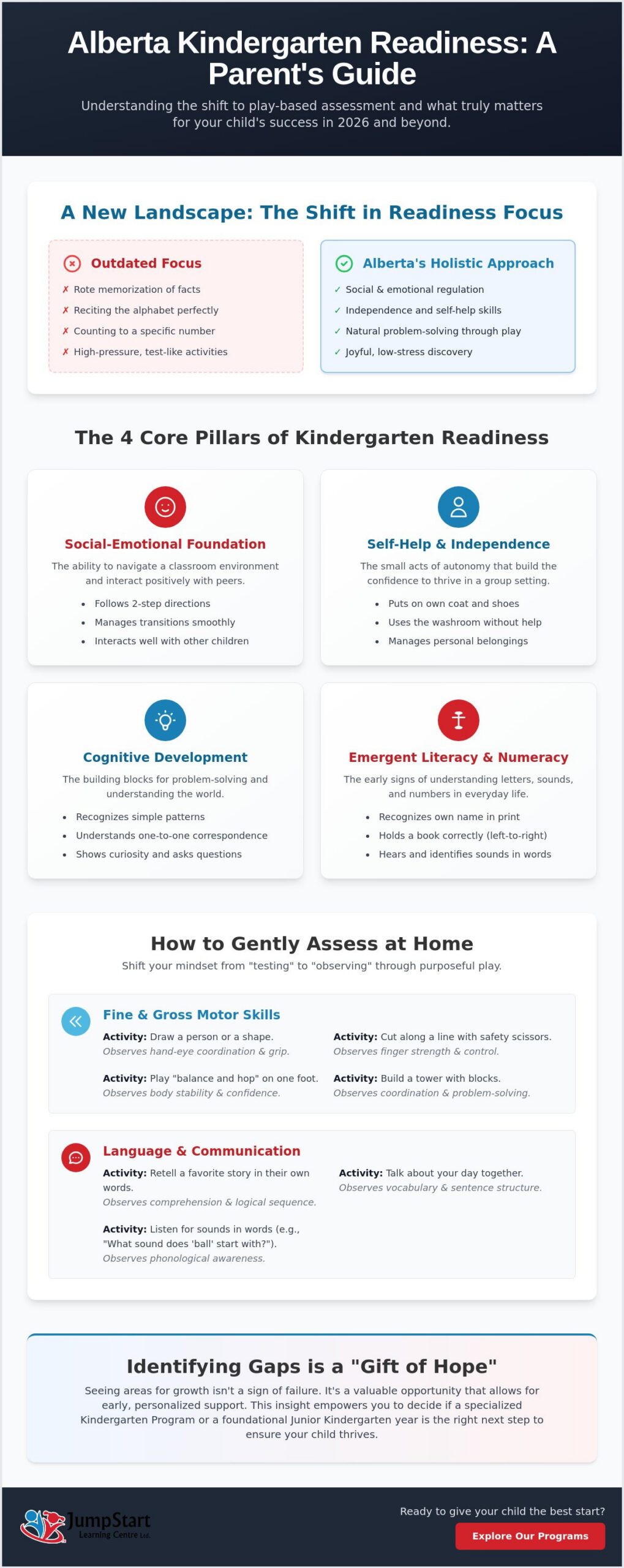
Understanding the Four Pillars of Kindergarten Readiness in Alberta
Parents often ask, “What is Kindergarten Readiness?” It’s easy to assume the answer lies in a child’s ability to recite the alphabet or count to twenty. However, in Alberta, readiness is viewed as a holistic state of being. It’s about how prepared a child is for the social and academic environment of a classroom, rather than just a checklist of memorized facts. When you begin assessing kindergarten readiness at home, it helps to view this milestone as a spectrum of growth. Every child develops at their own pace. Seeing where they land on that spectrum today is simply the first step toward a successful tomorrow.
Alberta’s standards, influenced by the provincial Early Learning and Care Framework, emphasize social-emotional regulation and independence. This shift away from rote memorization often brings a sense of relief to families. You don’t need to turn your living room into a high-pressure testing center. Instead, we embrace a “Play with Purpose” philosophy. This lens allows you to observe your child’s latent capabilities through their natural interactions, ensuring the process remains joyful and supportive.
The Social-Emotional and Self-Help Foundation
Cognitive, Literacy, and Numeracy Milestones
While social skills are foundational, cognitive milestones provide the tools for academic discovery. We look for “emergent literacy” markers during daily story time. Does your child recognize their own name in print? Do they hold a book correctly and understand that we read from left to right? Numeracy is also more than just counting numbers in a row. It involves recognizing patterns in the world and understanding one-to-one correspondence, such as knowing that three crackers on a plate match the spoken number three. Assessing kindergarten readiness at home through these playful observations helps you identify where your child is flourishing and where they might benefit from a specialized learning environment.
A Step-by-Step Guide to Assessing Readiness Through Purposeful Play
When you begin assessing kindergarten readiness at home, it’s vital to shift your mindset from “testing” to “observing.” Many traditional assessments feel like formal exams, which can cause young children to shut down and hide their true latent capabilities. Instead, aim to capture their skills in a familiar, nurturing space when they are well-rested and curious. You don’t need specialized kits or complex worksheets to understand your child’s progress. Simple, everyday items like building blocks, favorite picture books, and crayons are the most effective tools for a gentle, accurate evaluation. Focus your attention on the process of how they solve a problem, such as how they decide which block to place next, rather than just the final result.
Observing Fine and Gross Motor Skills
Physical readiness involves both the delicate control of small muscles and the stability of larger ones. You can check for grip and control by asking your child to “draw a person” or “cut a path” along a piece of paper using safety scissors. These activities reveal their current level of hand-eye coordination and finger strength. For gross motor skills, head to the backyard for a game of “balance and hop.” Watching how they stabilize their body while jumping or standing on one foot provides a clear picture of the physical confidence they’ll need for active school days and recess play.
Assessing Language and Communication
Strong communication is the heartbeat of the classroom experience. After reading a favorite story together, ask your child to retell the events in their own words. This simple interaction helps you check for comprehension and their ability to follow a logical sequence. During these moments, you can also listen for phonological awareness, which is the ability to hear and manipulate sounds in spoken language. This skill is a primary focus of Alberta’s Official Screening Process. If you’re looking for more ways to build these foundations, our guide on Choosing the Best Preschool in Edmonton offers further context on skill-building. Remember, identifying a gap now is a gift of time, allowing you to explore enrichment options that turn obstacles into achievements.
Interpreting Results: When to Seek a Professional Jumpstart
It’s common to feel a wave of concern if your efforts at assessing kindergarten readiness at home reveal that your child isn’t meeting every milestone yet. You might ask, “What if my child just isn’t ready?” Please take a deep breath and know that you aren’t alone. Identifying these gaps early is actually a gift of hope. It provides a clear window into your child’s needs before they enter a more formal school environment. Since 2021, approximately 80,000 children in Alberta were identified as being at risk for reading or math struggles, yet around 70,000 of them overcame those challenges with the right intervention. A gap isn’t a permanent barrier; it’s simply a signpost pointing toward the next step in their individual journey.
For families in Edmonton and Beaumont, choosing to wait another year without professional support often misses a vital window for growth. Instead of simply waiting, many parents find that a structured Junior Kindergarten or Pre-K Program acts as the perfect intentional bridge. These programs combine the joy of purposeful play with the scientific foundations of core academic competencies. This balanced approach accelerates development in a nurturing center, allowing children to discover their latent capabilities alongside their peers.
The Role of Junior Kindergarten in Academic Momentum
A Junior Kindergarten Program differs significantly from standard daycare. While daycare focuses primarily on care and supervision, our curriculum is specifically aligned with Alberta’s early learning standards. We emphasize Literacy and Numeracy Enrichment for children who need a stronger foundation before the mandatory screenings begin in the 2026/27 school year. This structured environment builds the academic momentum and social confidence required to thrive in a 5-year-old Kindergarten Program.
How Jumpstart Learning Academy Supports Your Child’s Journey
At Jumpstart Learning Academy, we specialize in turning educational obstacles into stories of achievement. We create personalized learning plans that directly address the specific growth areas you noticed while assessing kindergarten readiness at home. Our expert mentors act as dedicated advocates for your child’s emotional and academic well-being. We invite you to join us for a professional evaluation to replace your anxiety with a clear, optimistic path forward. You can secure your child’s spot for the upcoming term today and begin the journey toward a confident school start.
Empowering Your Child’s Future Success
You’ve taken a vital step by assessing kindergarten readiness at home; you’re now equipped with the clarity needed to support your child’s unique path. We’ve explored how Alberta’s standards prioritize social-emotional growth and how purposeful play reveals your child’s true potential. Remember that identifying a learning gap isn’t a setback. It’s an opportunity to provide the specific support your child deserves before they enter the classroom.
At Jumpstart Learning Academy, we’re more than just an educational center. We’re your partners in this transformation. Our licensed early learning centers in Edmonton and Beaumont utilize a research-based curriculum that perfectly blends structure with play. We specialize in creating personalized learning plans that honor every student’s latent capabilities. Book a Professional Assessment and Tour at Jumpstart Learning Academy to turn your questions into a confident plan of action. Your child’s journey toward achievement starts with a single, supportive step. We look forward to walking that path with you.
Frequently Asked Questions
Is my child ready for kindergarten if they can’t read yet?
Yes, your child is absolutely ready for kindergarten even if they aren’t reading full sentences yet. Alberta’s curriculum focuses on “emergent literacy,” which includes recognizing their own name and understanding how books work. Teachers look for a child’s curiosity about sounds and stories rather than mastery of decoding text. If you’ve been assessing kindergarten readiness at home, focus on these foundational interests. We help bridge any gaps through structured play that prepares them for formal literacy screenings.
What are the most important social skills for kindergarten in Alberta?
The most critical social skills involve self-regulation and independence. Alberta educators value a child’s ability to follow two-step directions, share materials with peers, and manage their emotions during transitions. Being able to ask for help when needed and showing empathy are also vital indicators. These internal emotional growths are just as important as academic milestones. They allow your child to navigate the classroom environment with confidence, creating a positive start to their school journey.
How can I help my child build fine motor skills at home?
You can strengthen fine motor skills through engaging sensory activities. Encourage your child to use safety scissors to cut play-dough or use large tweezers to move pom-poms between bowls. These playful tasks build the hand strength and coordination necessary for holding a pencil and writing. While assessing kindergarten readiness at home, observe their grip on crayons or their ability to button a coat. These small, daily victories build the physical foundation for more complex classroom tasks.
Can a Junior Kindergarten program help if my child has a late birthday?
A Junior Kindergarten program is an excellent choice for children with late birthdays who might benefit from an extra year of development. It provides a structured bridge between preschool and the demands of a full kindergarten classroom. This extra time allows them to refine their social-emotional regulation and academic foundations without the pressure of being the youngest in the class. It’s about giving them the gift of time to discover their latent capabilities and enter school with momentum.
