
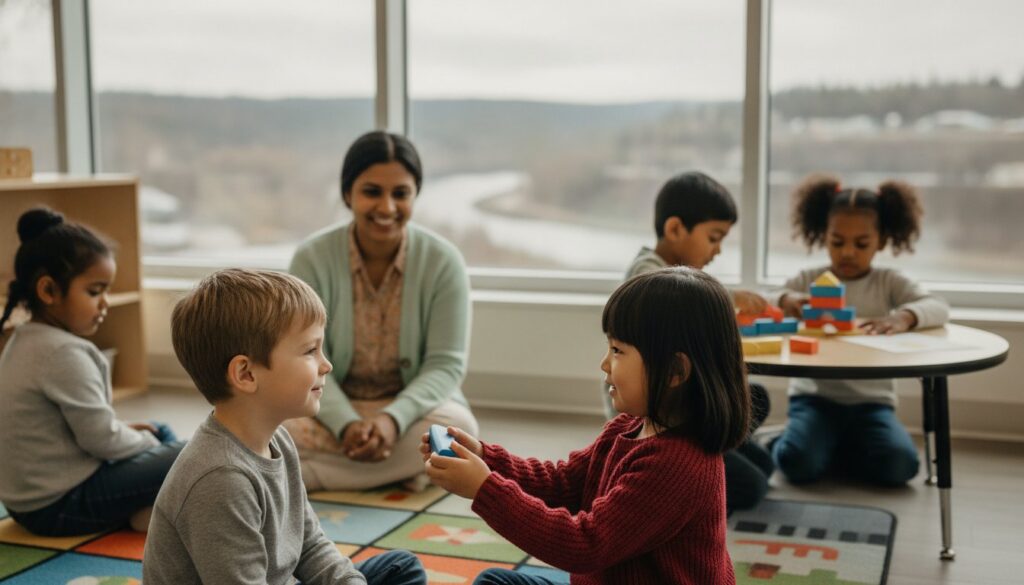
You watch from the sidelines as your three-year-old is pushed away from the play kitchen, and your heart instantly sinks. It’s a moment every parent dreads, sparking questions about whether a simple shove is just a developmental milestone or a sign of something deeper. Understanding bullying prevention in early childhood starts with recognizing that while these interactions feel heavy, they’re also vital opportunities for growth. It’s completely normal to feel anxious about your child being excluded or to worry that a biting incident today might impact their academic confidence later.
We’re here to help you move from worry to proactive support. In this guide, you’ll learn how to distinguish between typical peer conflict and early bullying behaviors using clear, research-based criteria. We’ll also share practical strategies to foster empathy and kindness in your preschooler through purposeful play. By the end, you’ll have a roadmap to build your child’s social resilience and the confidence to know your school is handling these delicate moments with the care they deserve.
Key Takeaways
- Learn to distinguish between normal developmental boundary-testing and true bullying by identifying repetitive patterns and power imbalances.
- Discover how “Play with Purpose” transforms everyday interactions into meaningful lessons that build your child’s empathy and social resilience.
- Understand the essential role of structured group norms in effective bullying prevention in early childhood and how they foster a sense of belonging.
- Gain confidence in Alberta’s licensing standards, which provide a professional framework for safe, respectful, and caring learning environments.
- Identify practical steps to collaborate with educators, ensuring a unified approach to resolving social struggles and celebrating your child’s growth.
Understanding Bullying vs. Normal Peer Conflict in Preschoolers
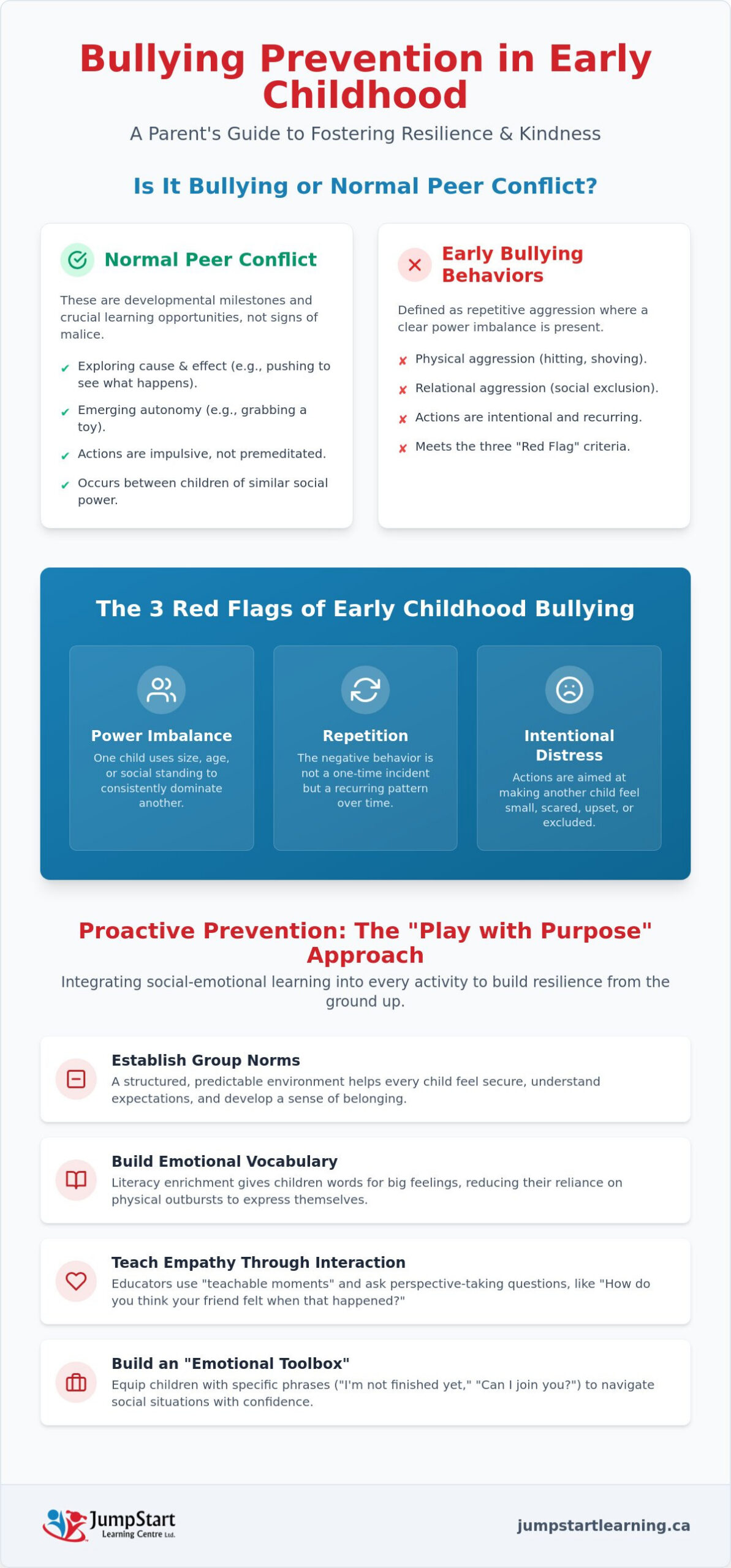
It’s natural to feel a pang of worry when your child comes home upset because someone took their favorite shovel. However, not every playground disagreement qualifies as bullying. In the context of bullying prevention in early childhood, we define bullying as repetitive aggression where a clear power imbalance exists. This is quite different from “developmental testing,” where a toddler pushes a peer simply to see what happens next. They’re often exploring cause and effect rather than trying to cause harm.
While physical acts like hitting are easy to spot, we also look for “Relational Aggression.” This involves social exclusion, such as telling a peer they can’t play in the sandbox or join a game. For a foundational perspective, this school bullying overview explains how these behaviors can manifest across different age groups. Because young children often lack the cognitive maturity for premeditated harm, early intervention must focus on teaching social tools rather than applying punishment.
The Three Red Flags of Early Childhood Bullying
Identifying true bullying requires looking for these specific markers:
- Power Imbalance: One child consistently uses their size, age, or social standing to dominate another child physically or emotionally.
- Repetition: The behavior isn’t a one-time incident; it’s a recurring pattern that happens over days or weeks.
- Intentional Distress: The actions are specifically aimed at making another child feel small, scared, or upset.
Normal Social Learning Curves
In our Preschool Program (3 Year Olds), we watch children move from “parallel play,” where they play near each other, to “cooperative play,” where they actually interact. During this transition, grabbing a toy or a lack of turn-taking is often a milestone of emerging autonomy, not a sign of malice. These moments are opportunities for our educators to intervene and model the empathy needed for long-term bullying prevention in early childhood. We treat these as learning moments, helping children discover their own capabilities for kindness and connection.
Proactive Prevention: How “Play with Purpose” Builds Social Resilience
While many experts suggest that simple supervision is the primary way to stop conflict, we believe in a more active approach. Our “Play with Purpose” philosophy integrates social-emotional learning into every block tower and storytime. By teaching children how to follow group norms within our structured academics, we create a predictable environment where every student feels secure. This structure is a cornerstone of effective bullying prevention in early childhood. You might find it helpful to read about choosing the best preschool in Edmonton to see how different social environments can impact your child’s development.
Our focus on Literacy and Numeracy Enrichment serves a dual purpose. It builds academic skills while giving children the precise vocabulary they need to express big feelings. When a child can name their frustration, they’re far less likely to resort to physical outbursts. This alignment with Community-Wide Bullying Prevention Efforts ensures we’re building a foundation of communication that lasts a lifetime. It’s about moving away from the stress of social struggle toward the joy of genuine connection.
Teaching Empathy Through Guided Interaction
Our educators don’t just watch from the sidelines; they step in during “teachable moments” to mirror emotional responses. In our Junior Kindergarten Program (4 Year Olds), we use perspective-taking exercises to help children understand the impact of their actions. We might ask, “How do you think your friend felt when the blocks fell?” This simple question helps children discover their latent capacity for kindness. You can explore our programs to see how we nurture these social bonds daily.
Building the “Emotional Toolbox”
We equip every student with a specific set of phrases to use when they feel overwhelmed or excluded. Instead of pushing, we teach them to say, “I’m not finished yet” or “Can I join you?” Because every child is unique, our personalized learning plans address individual social triggers. This ensures that every child receives the specific support they need to navigate the complexities of preschool play with confidence and grace.
Creating a Safe Learning Environment: Alberta Standards and Parent Action
Every licensed preschool in Alberta must operate under strict behavior management guidelines designed to keep children safe. Starting September 1, 2026, updates to the Alberta Education Act through Bill 25 emphasize a “safe and caring environment that fosters and maintains respectful and responsible behaviours.” This legislative shift reinforces the importance of bullying prevention in early childhood by setting clear expectations for conduct from the very beginning. When a classroom feels like a nurturing sanctuary rather than a chaotic space, stress-based aggression naturally drops. Children can focus on discovery when they aren’t worried about their physical or emotional safety.
If you suspect your child is facing social struggles, it’s vital to initiate a collaborative conversation with their educator. Instead of approaching the talk with a defensive mindset, view the teacher as your partner in your child’s growth. Book a quiet time to meet rather than chatting during a busy drop-off. Share what you’ve observed at home and ask how those same dynamics look in the classroom. You can enroll your child in a program that prioritizes this level of transparent, social-emotional communication to ensure they’re always supported.
Talking to Your Child About Social Safety
You don’t need to use the word “bullying” with a four-year-old to understand their day. Ask open-ended, age-appropriate questions like, “Who did you sit with at snack time?” or “Was there a part of your day that felt a little bit sad?” If they share a difficult moment, validate their feelings immediately. Say, “It’s okay to feel sad when someone doesn’t share,” which provides comfort without escalating their anxiety. This approach builds the trust they need to come to you as they grow.
What to Look for in a Preschool’s Prevention Policy
When touring a center, ask specific questions about teacher-to-child ratios. In Edmonton and Beaumont, lower ratios mean educators can actively intervene during play to model empathy. Inquire how the school handles “Kindergarten Readiness” from a social perspective. Programs like Show Me Love Learning Academy illustrate how a dedicated focus on social-emotional development prepares children for the complexities of the playground. A strong program doesn’t just focus on letters and numbers; it ensures a child has the emotional regulation skills to handle the bigger playground dynamics they’ll face in grade school. This proactive foundation is the ultimate gift for your child’s long-term resilience.
Empowering Your Child’s Social Journey
Building social resilience is about more than just stopping negative behaviors; it’s about unlocking your child’s natural capacity for empathy and kindness. By understanding the difference between developmental testing and true bullying, you can guide your preschooler through social hurdles with clarity and calm. Effective bullying prevention in early childhood relies on a strong partnership between home and school, where our “Play with Purpose” philosophy replaces frustration with proven social tools. We believe every child deserves to feel safe and confident as they navigate their first friendships.
As a licensed early learning centre in Alberta, we provide a research-based environment where experienced educators specialize in social-emotional development. We’re here to ensure your child feels safe, seen, and supported every single day as they build the foundations for future academic and social success. Secure your child’s spot in our nurturing Preschool or Junior Kindergarten programs today.
Your child’s social journey is a beautiful path of discovery. With the right guidance and a steady, optimistic hand, they’ll transform today’s playground challenges into tomorrow’s lifelong friendships and achievements. We’re excited to walk this path with you and celebrate every milestone along the way.
Frequently Asked Questions
Can a 3-year-old actually be a bully?
At age three, children are rarely capable of the premeditated intent required for true bullying. While their actions might feel aggressive, they’re usually exploring boundaries or lack the words to express frustration. We focus on bullying prevention in early childhood by teaching these young learners how their actions impact others. It’s about coaching them through the transition from parallel play into cooperative interactions rather than applying negative labels to their developmental milestones.
What should I do if my child is being excluded by peers at preschool?
Start by validating your child’s feelings at home so they feel heard and emotionally secure. You can practice “entry phrases” together, such as “Can I play too?” or “I like blocks, can I help?” If the exclusion is a repeating pattern, schedule a collaborative meeting with your child’s educator. They can facilitate inclusive play during center time and help bridge social gaps by pairing children with similar interests during structured activities.
How do Jumpstart Learning Academy educators handle aggressive behaviour in the classroom?
Our educators use immediate, gentle intervention to transform aggressive moments into teachable moments. We follow our “Play with Purpose” philosophy, which means we don’t just stop the behavior; we explain the emotional impact and provide a positive alternative. By modeling empathy in real-time, we help children discover their own capacity for kindness. Every incident is handled with a focus on emotional growth and individual support, ensuring the classroom remains a sanctuary for all.
Is my child’s biting or hitting a sign of future bullying behaviour?
Physical outbursts like biting or hitting in the preschool years are typically signs of limited communication skills, not a predictor of future bullying. When a child feels overwhelmed and doesn’t have the vocabulary to say “stop,” they might lash out physically. We address this by building their “emotional toolbox” through literacy and numeracy enrichment. Providing them with the right words today prevents these impulsive reactions from becoming long-term habits.
How does the Alberta Early Learning and Care Framework address bullying?
The framework focuses on creating safe and caring environments where children learn respectful and responsible behaviors through daily interactions. This aligns with Alberta’s legislative updates, such as Bill 25, which requires licensed centers to have clear behavior management policies starting September 1, 2026. By prioritizing social-emotional learning, the framework ensures that bullying prevention in early childhood is woven into the curriculum. It emphasizes nurturing the whole child to build lasting social resilience.
