
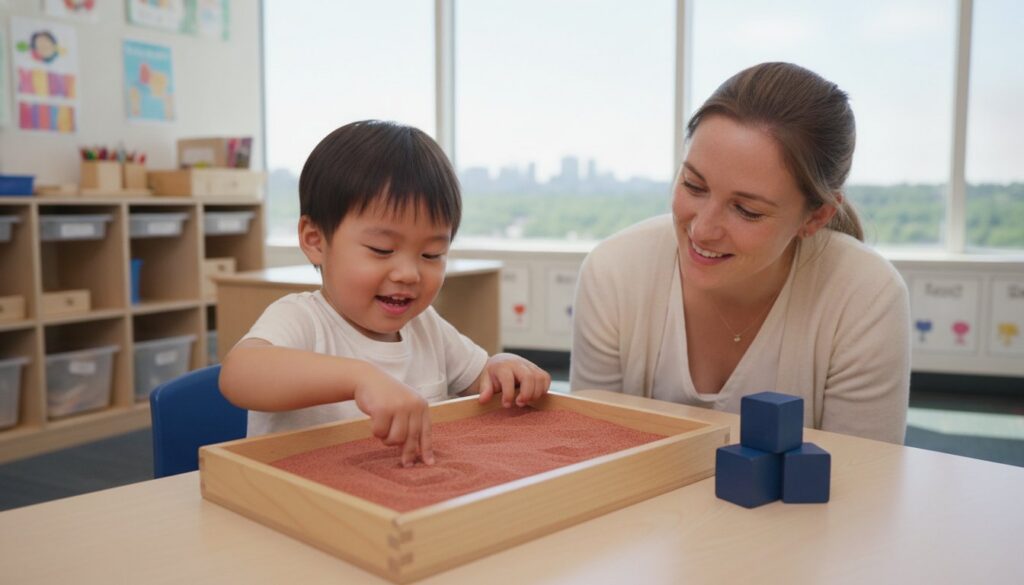
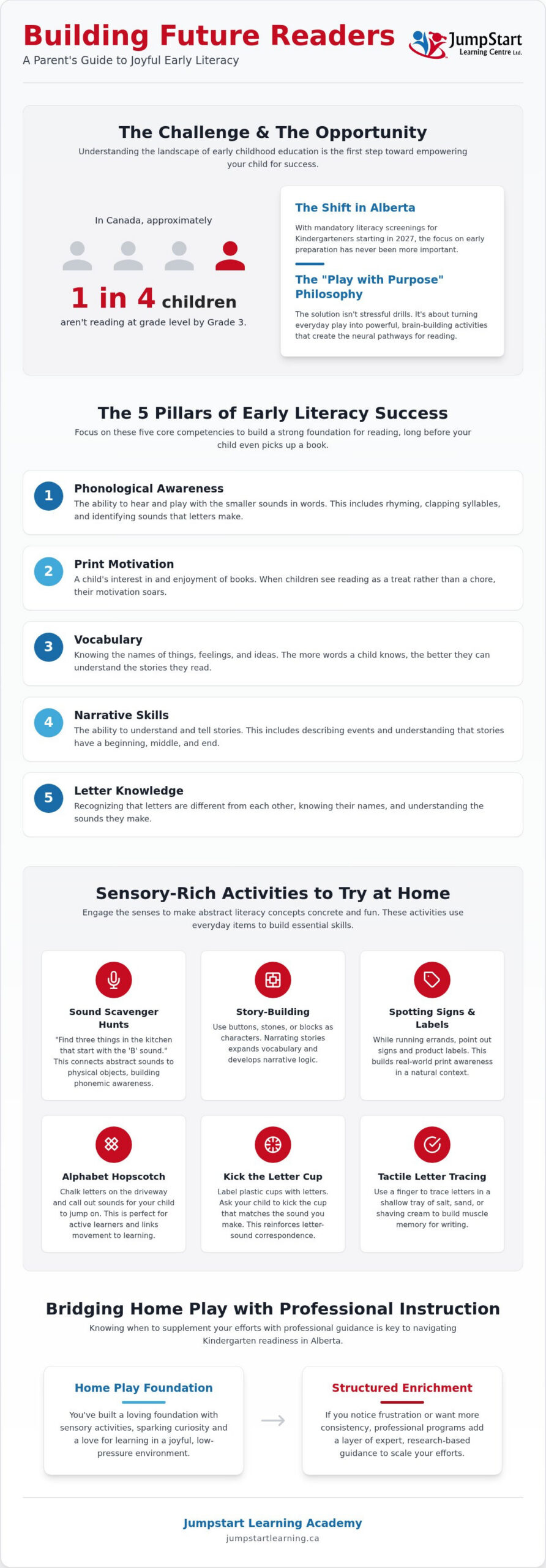
Did you know that approximately one quarter of Canadian children aren’t reading at grade level by Grade 3? This statistic often sparks a quiet worry in parents, especially with Alberta’s new mandatory literacy screenings beginning in 2027. You likely feel the pressure to prepare them for school, yet you don’t want to sacrifice their precious time for play. It’s a delicate balance, but you don’t have to choose between academic growth and childhood wonder. By using purposeful early literacy activities for preschoolers, you can turn messy, sensory play into the building blocks of reading.
This guide offers research-based strategies that fit into your busy schedule without complex setups. You’ll learn how to use movement and touch to meet Alberta kindergarten standards, giving you the confidence that your child is thriving. Let’s explore how to transform daily routines into shared moments of discovery and lasting achievement.
Key Takeaways
- Understand how the “Play with Purpose” philosophy bridges the gap between simple fun and the neural pathways needed for future reading success.
- Discover simple, sensory-rich early literacy activities for preschoolers that use household items to strengthen fine motor skills and phonemic awareness.
- Learn the specific benchmarks for kindergarten readiness in Alberta so you can feel confident your child is meeting local developmental standards.
- Relieve the anxiety of falling behind by making literacy a natural, joyful part of your family’s daily routines and shared moments.
Understanding Early Literacy: More Than Just the ABCs
Many parents feel a spike of anxiety when they see a neighbor’s child reciting the alphabet while their own preschooler is happily digging in a sandbox. It’s natural to worry that play is “just play,” but the truth is far more encouraging. Understanding Early Literacy goes far beyond naming letters; it’s the broad foundation of communication that includes listening, speaking, and print awareness. You are your child’s first and most important literacy mentor. Every time you describe the weather or read a bedtime story, you’re lowering the barriers to their future academic success.
Our “Play with Purpose” philosophy recognizes that intentional play builds the vital neural pathways required for reading. When you integrate early literacy activities for preschoolers into your day, you aren’t just entertaining them. You’re providing the structural support their brains need to decode symbols and sounds later in life. This approach moves away from the stress of “getting it right” and toward the joy of discovery.
The Five Pillars of Early Literacy Success
7 Sensory-Rich Literacy Activities to Try at Home
Sensory play isn’t just about the mess; it’s about making abstract concepts concrete. When children use their hands to explore, they anchor new information more deeply in their developing brains. Integrating early literacy activities for preschoolers into your home routine can be as simple as using what you already have in your pantry or toy box. These moments transform your living room into a vibrant learning environment.
- Tactile Letter Tracing: Fill a shallow tray with salt or shaving cream. Have your child trace letters with their finger to build the fine motor muscles and muscle memory essential for future writing.
- Sound Scavenger Hunts: Ask your child to find three things in the kitchen that start with the “B” sound. This builds phonemic awareness by connecting abstract sounds to physical objects.
Movement-Based Games for Active Learners
Some children learn best when their whole body is in motion. You can set up “Alphabet Hopscotch” by chalking letters on your driveway and having them jump to the sound you call out. Another favorite is “Kick the Letter Cup,” where you label plastic cups and ask them to kick the one that matches the sound you make. These games bridge the gap between physical play and academic foundations. While running errands at Edmonton stores, point out labels and signs to build real-world print awareness. This simple habit is a great step toward Kindergarten Readiness in Alberta. If you want to see how these play-based methods translate into a classroom setting, feel free to explore our local programs. Using early literacy activities for preschoolers daily ensures your child feels capable and ready for the next big step.
Preparing for Kindergarten Readiness in Alberta
Alberta’s early learning landscape is shifting. With mandatory literacy screenings for Kindergarten students scheduled for early 2027, many parents feel a new urgency to ensure their little ones are prepared. The provincial “FLIGHT” framework highlights the importance of play, but you might wonder when your home-based early literacy activities for preschoolers need a professional boost. It’s often a question of consistency and specialized observation. If your child seems frustrated by letter sounds or struggles to follow a story’s narrative flow despite your best efforts, professional enrichment can provide the clarity you need. Moving into a structured academic preschool program isn’t about ending the fun. It’s about adding a layer of expert, research-based guidance to the loving foundation you’ve already established.
Bridging Home Play with Professional Instruction
At Jumpstart Learning Academy, we act as your dedicated partner in this journey. Our personalized learning plans take the sensory early literacy activities for preschoolers you start at home and scale them within a collaborative classroom setting. While you can find many creative literacy activities for preschoolers to try in your kitchen, our “Play with Purpose” curriculum in Edmonton and Beaumont ensures these moments are sequenced for specific developmental milestones. This environment allows children to practice social communication alongside academic skills. We help turn the anxiety of upcoming school benchmarks into the quiet confidence of a child who feels truly seen and supported. You don’t have to navigate these requirements alone; we’re here to ensure your child’s transition is a joyful transformation.
Empower Your Child’s Literacy Journey
The journey toward reading success starts with a single sensory experience. By embracing early literacy activities for preschoolers at home, you’ve already laid a beautiful foundation of curiosity and confidence. Literacy isn’t a race to the finish line; it’s a gradual discovery of your child’s latent capabilities through touch, sound, and shared stories. As you prepare for Alberta’s upcoming kindergarten benchmarks, remember that you don’t have to carry the weight of academic readiness alone. To find tailored support for your child’s learning style, you can learn more about Singapore Home Tuition and their online tutoring options.
As a licensed Alberta early learning centre, we’re here to help. Our research-based “Play with Purpose” curriculum and personalized learning plans ensure every student thrives. Secure your child’s spot for the upcoming term at Jumpstart Learning Academy today. Let’s work together to transform these early play moments into a lifetime of achievement and joy.
Frequently Asked Questions
What is the best age to start literacy activities with my preschooler?
You can foster a love for language from birth, but intentional early literacy activities for preschoolers usually start around age three. This is when children’s curiosity about symbols and their fine motor skills begin to align. Focus on making these moments joyful and pressure-free to build a positive association with learning that lasts a lifetime.
How do I help my child if they have no interest in letters or reading?
Validate their feelings first; it’s okay if they aren’t ready for books yet. Try integrating letters into their favorite hobbies, like labeling a toy garage or using alphabet bath stickers. Sensory-rich experiences often spark interest in children who find traditional sitting and listening tasks difficult. The goal is to show them that literacy is a tool for discovery.
What are the kindergarten readiness standards in Alberta?
Alberta’s readiness benchmarks prioritize a child’s ability to communicate needs, follow simple routines, and interact positively with others. While recognizing some letters is helpful, the province’s “FLIGHT” framework values the development of “mighty learners” who are curious and capable. These social and emotional foundations are just as vital as academic knowledge for a smooth transition to school.
Can play-based learning really prepare my child for a structured school environment?
Intentional play is the highest form of research for a young brain. When children participate in early literacy activities for preschoolers, they’re practicing the focus and self-regulation skills needed for a desk-based environment. This “Play with Purpose” approach bridges the gap, ensuring they have the confidence to handle structured lessons without losing their natural spark for learning.
