Enrollment Now Open for:
26/27 School Year

Welcome to our Preschool Information Package

We truly appreciate your interest in our program.

Please review each section carefully as there is a lot of important information being covered. 

Toilet Training Policy & Guidelines

Starting preschool is a big transition, and we understand that toileting is one area parents often have questions about.

Children entering our independent preschool programs should be toilet trained or very close to being fully independent. This means they should already be regularly using the toilet, be familiar with the bathroom routine, and have begun practicing skills such as wiping, managing clothing, flushing, and washing their hands.

We do not expect every three-year-old to perform every step perfectly or completely independently.

Our educators will provide reminders, guidance, checks, and age-appropriate assistance when needed while continuing to encourage children to complete as much of the routine independently as they are able.

What Does “Toilet Trained” Mean at Jumpstart?

For our independent preschool programs, children should generally be able to:

  • Regularly use the toilet for pee and bowel movements
  • Communicate when they need to use the washroom or respond to an educator’s reminder
  • Pull clothing up and down with minimal assistance
  • Be familiar with wiping and attempt to wipe themselves
  • Flush and wash their hands with reminders as needed

Children do not need to have completely mastered every step.

For example, a child may attempt to wipe independently but still need an educator to provide verbal guidance, check that they are properly clean, or provide additional assistance when needed.

Our goal is to support an emerging skill—not introduce the toileting routine for the first time at school.

How Our Educators Support Children

Our educators encourage children to complete the bathroom routine as independently as possible.

During the initial transition period, particularly during the first month of school, children may need additional support while becoming comfortable with a new classroom, educators, and washroom routine.

Support may include:

  • Regular reminders to use the washroom
  • Verbal prompts through the toileting routine
  • Encouraging children to try wiping themselves first
  • Checking that a child is properly clean
  • Providing additional wiping assistance when needed
  • Helping with clothing when necessary
  • Helping children get cleaned up and changed following an occasional accident
  • Offering reassurance and encouragement

As children gain confidence and demonstrate greater independence, educators will gradually reduce the amount of support they provide.

You may be surprised how quickly children become more independent once they are following consistent routines in the preschool environment.

Wiping Independence

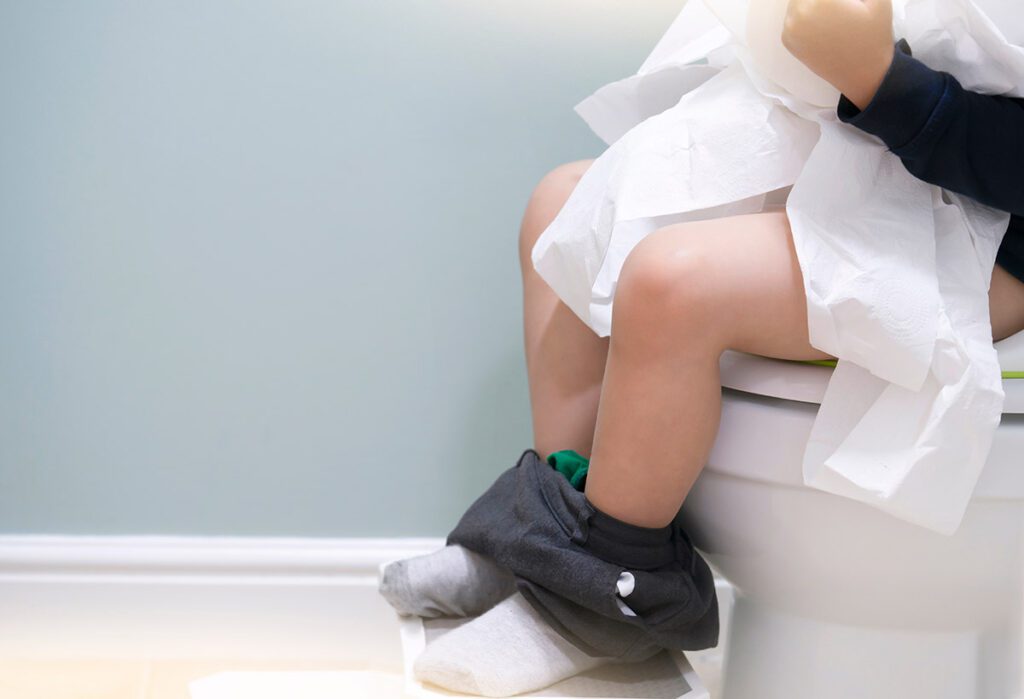
Wiping is a skill that develops gradually, and we recognize that many young three-year-olds are still learning.

Before beginning preschool, families should have their child regularly practicing wiping at home rather than relying entirely on an adult to complete the task.

At school, children will be encouraged to try first. Educators can then provide verbal guidance, check their work, and assist further when necessary.

We recognize that wiping after a bowel movement is often one of the last toileting skills young children master. If this is the only part of toileting your child still finds difficult, it does not necessarily mean they are not ready for preschool.

The expectation is that children are actively participating in the toileting process and continuing to develop independence.

Communication Is an Important Part of Readiness

One of the most important signs of toilet readiness is a child’s ability to communicate when they need to use the washroom.

Our educators provide regular verbal reminders throughout the class, particularly during natural transition times.

However, as children become more independent, they should also begin recognizing when they need to go and letting an educator know.

Building this self-awareness and communication is an important part of toilet independence.

Planning Around Your Child’s Routine

Because children attend Jumpstart for part of the day rather than a full day of care, we can often work with families to make toileting routines more manageable—particularly for children who are still developing independence with bowel movements and wiping.

Many young children have a fairly predictable bowel movement routine. If your child typically has a bowel movement at a particular time of day, please let your child’s educators know.

Together, we may be able to develop a simple plan that works with your child’s natural routine. This may include:

  • Encouraging your child to use the toilet before coming to class
  • Building extra bathroom time into your child’s routine before drop-off
  • Letting educators know your child’s typical toileting schedule
  • Providing a bathroom reminder at an appropriate time during class
  • Temporarily using a pull-up when appropriate as part of an agreed-upon transition plan
  • Practicing bowel movement wiping skills at home when there is more time and privacy to learn

The goal is not to avoid children using the bathroom at school. Children are always welcome and encouraged to use the washroom whenever they need to.

Rather, because our programs are only part of the day, families and educators can often work together to create a routine that reduces unnecessary stress while a child continues developing independence.

If bowel movements are the only area in which your child still requires significant assistance, please speak with us. We can discuss your child’s current routine and determine whether a simple transition plan can help set them up for success.

Pull-Ups & Transitional Support

Children enrolled in our independent preschool programs should be regularly using the toilet rather than relying on diapers or pull-ups for routine toileting.

However, if a child is very close to being fully toilet trained but is experiencing frequent accidents, we may recommend the short-term use of a pull-up as a transitional support.

Pull-ups may help:

  • Minimize significant accidents
  • Keep children comfortable and hygienic
  • Reduce disruption to the classroom
  • Support a child while they continue developing toilet independence

A pull-up should not replace regular toilet use or toilet-training practice.

Children wearing pull-ups will still be encouraged to use the toilet, communicate when they need to go, and participate in the bathroom routine.

If a pull-up is recommended, our educators will work with the family to develop a plan to continue progressing toward full independence and gradually phase it out.

Please keep in mind that a soiled pull-up can still cause discomfort for the child and can be disruptive to the classroom. Pull-ups should therefore be used only when necessary and as part of a clear transition plan.

Clothing That Supports Independence

What children wear can make a significant difference in their toileting success.

Please send your child in clothing that they can manage as independently as possible.

We recommend:

  • Elastic-waist pants
  • Joggers
  • Leggings
  • Other easy-to-pull-down clothing

Whenever possible, please avoid:

  • Overalls
  • Belts
  • Tight jeans or pants
  • Complicated buttons or fasteners

Practicing buttons, snaps, zippers, and pulling clothing up and down at home can also help children gain confidence and prevent accidents.

Building Independence Together

Our goal is not for children to arrive at Jumpstart with every toileting skill completely mastered.

Rather, children should arrive with a strong foundation of toilet readiness, be regularly using the toilet, and already be practicing the skills required for increasing independence.

We ask families to reinforce the same routines at home that children will be encouraged to use at preschool:

  • Communicating when they need to use the washroom
  • Trying to wipe independently before asking for help
  • Pulling clothing up and down
  • Flushing the toilet
  • Washing and drying their hands
  • Telling an adult when they genuinely need assistance

Our educators will encourage, guide, check, and assist when needed, while continuing to move children toward greater independence.

With consistent routines at home and at school, open communication, and encouragement from both families and educators, children often make tremendous progress very quickly.

We want toileting at preschool to be a safe, supportive, and confidence-building experience for every child.

Accidents: What to Expect

Occasional accidents are a normal part of developing toilet independence, particularly when children are adjusting to a new environment.

Our educators handle accidents calmly, discreetly, and respectfully.

Please ensure your child always has a complete change of clothing available at school.


Pee Accidents

If your child has a pee accident, our educators will:

  • Help your child get cleaned up
  • Assist them in changing into their spare clothing as needed
  • Support them calmly and discreetly
  • Let you know about the accident through our regular communication process or at pick-up

An occasional pee accident does not mean that a child is not ready for preschool.


Bowel Movement Accidents

Bowel movement accidents require additional cleaning and may require a parent or guardian to pick up the child from class.

If your child is not wearing a pull-up:

Our educators will:

  • Provide immediate assistance to help clean your child
  • Help them change into their spare clothing
  • Keep them comfortable and supported
  • Contact you to arrange pick-up from class

If your child is wearing a pull-up:

If your child has a bowel movement in their pull-up, we will contact you to arrange pick-up.

Your child will be kept supported and as comfortable as possible while waiting.

If no spare clothing is available:

If your child has an accident and does not have appropriate spare clothing available, we may need to contact you to arrange pick-up.

For this reason, please ensure that a complete change of clothing is always available.


Repeated or Frequent Accidents

Occasional accidents are expected. Frequent accidents may indicate that a child needs additional support or more time to develop toileting readiness.

If we notice an ongoing pattern, we will speak with you and work together to determine appropriate next steps.

Strategies may include:

  • Increasing bathroom reminders
  • Creating more consistent home and school routines
  • Practicing specific toileting skills at home
  • Temporarily using a pull-up
  • Developing an individualized transition plan
  • Adjusting routines around your child’s typical bowel movement schedule

If frequent accidents continue and are significantly affecting your child’s comfort, hygiene, participation, or the classroom environment, we may recommend a temporary break from the program to focus on toilet training at home.

This would always be a last resort after collaborative efforts have been made.


Scroll to Top