
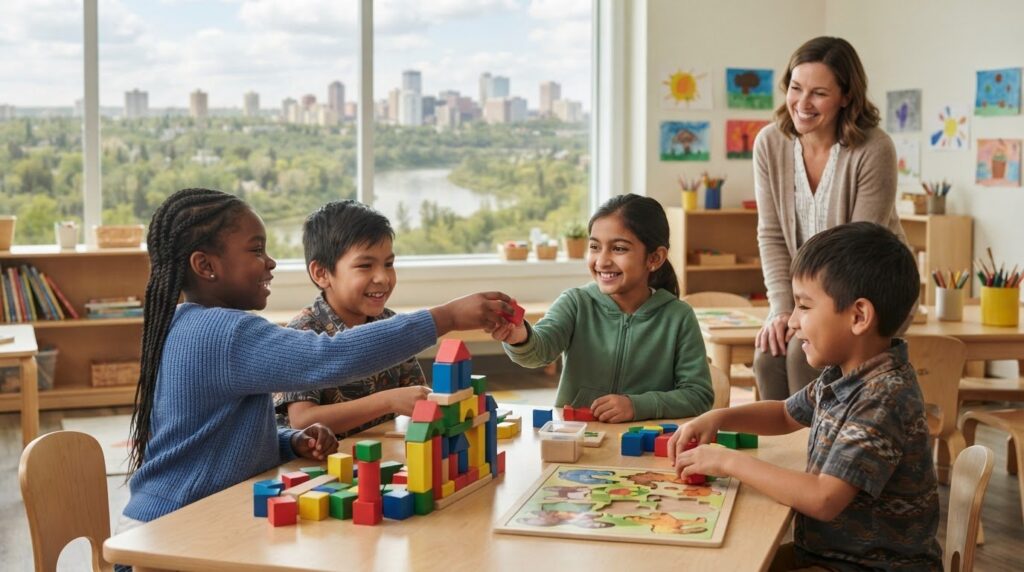
A child who has no friends today isn’t destined to stay alone. Children may start making friends around age 3, often as they begin preschool, and early friendships can be simple: a child might have 1-2 playmates or enjoy their own company. If you’re helping your child make friends at school, remember that social connections can grow at different rates.
It’s understandable to worry when your child seems left out or finds it hard to join in. This guide explains when friendships often begin, how to practise relationship skills at home, and what small, supportive steps can help when your child has no friends. You’ll also learn how to support your child without adding pressure, and when a conversation with their teacher may help you understand what’s happening at school.
Key Takeaways
- Children build friendships at different paces, so notice what helps your child feel comfortable and connected.
- Practise empathy, turn-taking, and joining a game through relaxed conversations and play at home.
- If your child feels left out, acknowledge their feelings and choose one manageable step to help them connect.
- Age-appropriate preschool and kindergarten programs can offer children structured opportunities to learn and play alongside peers.
1. At What Age Should My Child Start Making Friends?
Many children begin making friends around age 3, often when preschool starts. Early friendships may mean 1-2 playmates, or a child may prefer playing alone. Friendships give children practice taking turns, reading social cues, and working through small disagreements. Feeling included can support self-esteem and emotional resilience as social skills develop.
If you’re helping your child make friends at school, start with a calm conversation after class. Ask, “Who did you play with today?” and listen without correcting them or rushing to solve the problem. Notice specific interactions, such as whether your child joins a game or watches nearby. If they’re not ready to talk, try again later or ask their teacher what they’ve observed.
Sports, dance, art classes, and Scouts can bring children together through shared interests. Suggest an activity your child enjoys instead of filling every afternoon. Regular participation gives peers a chance to recognize one another and feel comfortable. Before a first session, practise a simple introduction, such as, “Can I play too?”
Introversion isn’t a problem to fix. Children have different social limits and preferred group sizes. A shy child may find one-on-one play easier than joining a large group. Rehearse a greeting at home, then try a small social step, such as asking one classmate to play. Avoid pressuring your child to join every interaction. Friendships can take weeks or months of repeated contact to grow.
In Canada, bullying and discrimination protections are addressed through provincial or territorial education requirements and school policies, so procedures vary by location. Repeated exclusion, name-calling, or a sudden reluctance to attend school can signal a problem. Record specific incidents and speak with the teacher or school administration about support and next steps.
2. Teaching empathy and relationship skills at home
Children make and maintain friendships through listening, empathy, communication, cooperation, and emotional regulation. Help your child practise these skills in everyday situations. For example, after a sibling loses a game, ask how they might feel. This helps your child notice how actions affect others. Ask, “What might help them feel better?” and give your child time to answer.
Practise sharing and taking turns during a board game or family playtime. Let each person choose a game, wait for their turn, and handle a disappointing result. If your child grabs a toy, calmly prompt them to ask, “Can I use it when you’re finished?” Repeating everyday phrases makes social skills easier to use with peers.
Teach friendship through specific examples rather than lectures. Ask what makes someone a good friend, then talk about honesty, kindness, and respecting personal space. During a playdate, help your child notice whether their guest is enjoying the activity. Encourage open-ended questions about shared interests, such as a favourite story or game.
Disagreements are a normal part of relationships. Practise a sincere apology: name the action, recognize its effect, and consider how to make amends. For example, “I’m sorry I interrupted your game. Can I wait for a turn?” Explain that forgiveness can help friends move forward, while each person can still set boundaries.
If your child is struggling, discuss a specific situation with their teacher. Ask what they notice during group work or recess, then agree on a practical next step. A school counsellor may also support ongoing social or emotional concerns. Keep talking with your child and notice positive efforts, such as inviting someone to play or calmly resolving a conflict.
3. Helping a child who has no friends
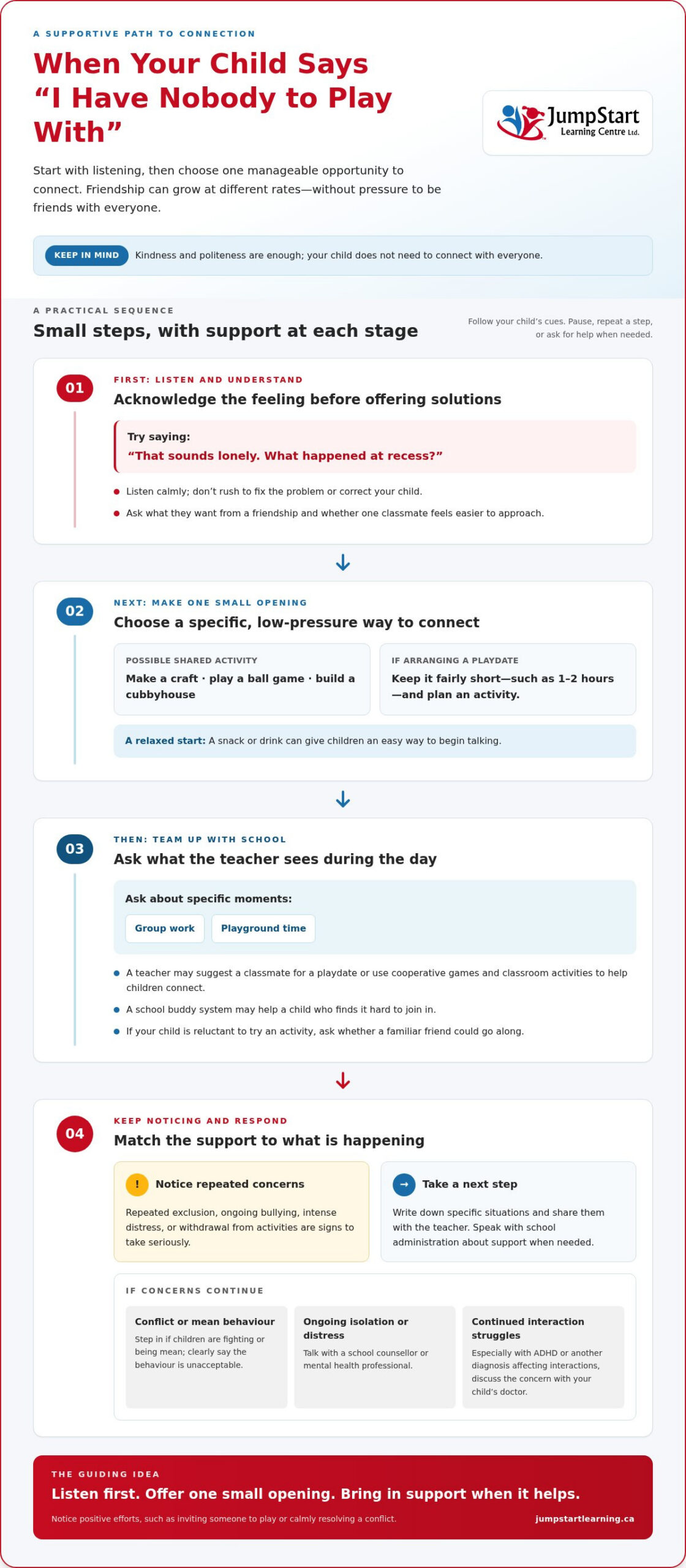
Hearing “I have nobody to play with” can hurt, but start by listening. Acknowledge your child’s feelings before suggesting solutions: “That sounds lonely. What happened at recess?” Ask what they want from a friendship and whether one classmate feels easier to approach. Don’t pressure them to be friends with everyone. Kindness and politeness are enough.
Choose one small, specific chance to connect. Help your child invite a classmate to make a craft, play a ball game, or build a cubbyhouse. If playdates feel difficult, keep the visit fairly short, such as 1-2 hours, and plan an activity in advance. A snack or drink can also give children a relaxed way to begin talking.
Ask the teacher what they notice during group work and playground time. They may suggest a classmate for a playdate or use cooperative games and classroom activities to help children connect. A school buddy system can also help a child who finds it hard to join in. If your child is reluctant to try an activity, ask whether a familiar friend could go along.
Watch for repeated exclusion, ongoing bullying, intense distress, or withdrawal from activities. Write down specific situations and share them with the teacher. Step in if children are fighting or being mean, and clearly say that the behaviour is unacceptable. If isolation or distress persists, speak with a school counsellor or mental health professional. If your child continues to struggle, especially with ADHD or another diagnosis affecting interactions, discuss the concern with their doctor or look into specialized support like Social Skills Australia.
Jumpstart Learning Academy: Preschool Program (3 Year Olds)
Jumpstart Learning Academy’s Preschool Program (3 Year Olds) offers young children opportunities to learn and play alongside peers. Its research-based curriculum combines structured academics with a “play with purpose” approach to support intellectual and social growth. For families considering preschool as a setting where children can practise everyday interactions, this program may be a relevant next step.
As your child grows, Junior Kindergarten Program (4 Year Olds) and Kindergarten Program (5 Year Olds) provide further age-specific learning options. Summer Camp Programs are another offering for families exploring structured activities with peers.
Each child’s social development unfolds at their own pace. Contact Jumpstart Learning Academy to learn more about its Preschool Program and whether it fits your family’s needs.
Keep building connection, one step at a time
Friendship grows through small moments of safety, practice, and belonging. Your child doesn’t need to become the most outgoing student in class. Notice what feels manageable for them, then make room for that opportunity to happen again. A quiet greeting, shared activity, or kind response can be the start of a stronger connection.
If you’re wondering how to keep helping my child make friends at school, remember that support can come from home and from a positive learning environment. Jumpstart Learning Academy offers early learning programs for children developing social confidence alongside academic skills. Each child’s needs and comfort level matter, so keep communication open as you consider what setting may suit your family.
Contact Jumpstart Learning Academy to explore its programs and discuss your child’s learning journey. With patient encouragement and steady opportunities to connect, your child can keep discovering their own way to build friendships.
Frequently Asked Questions
At What Age Should My Child Start Making Friends?
Many children begin making friends around age 3, often as they start preschool, but friendship may look different from child to child. At ages 8-13, friendships often become deeper and more meaningful. Rather than measuring progress by a particular age, notice whether your child has comfortable ways to connect, express preferences, and enjoy time with others.
What if my child says they have no friends at school?
Listen first, then gently explore what “no friends” means to your child. They may feel excluded at recess even if they chat with classmates during lessons. Ask which part of the school day feels hardest and what they would like to change. This can reveal whether they want a closer bond, help joining a group, or support with a specific peer situation.
What should I do if my child is shy?
Respect your child’s pace while helping them prepare for social moments. Before a school event, agree on one manageable goal, such as greeting a classmate or staying near a familiar activity. Afterwards, ask what felt comfortable and what they might try next time. This builds confidence without treating quietness as something that needs correcting.
When should parents consider professional support?
Seek added support if your child experiences persistent isolation, ongoing bullying, intense distress, major mood changes, or withdraws from activities they previously enjoyed. A school counsellor or mental health professional can help assess what support may be useful. If your child has ADHD or another diagnosis that affects interactions, discuss ongoing friendship difficulties with their doctor.
How can I help a shy or anxious child connect with classmates?
Make social plans predictable and let your child help choose the setting. They may feel more at ease talking while drawing than joining a busy game. Practise a simple opener about something nearby, such as a class project or book. Afterwards, focus on the effort they made, not whether a friendship formed right away.
