
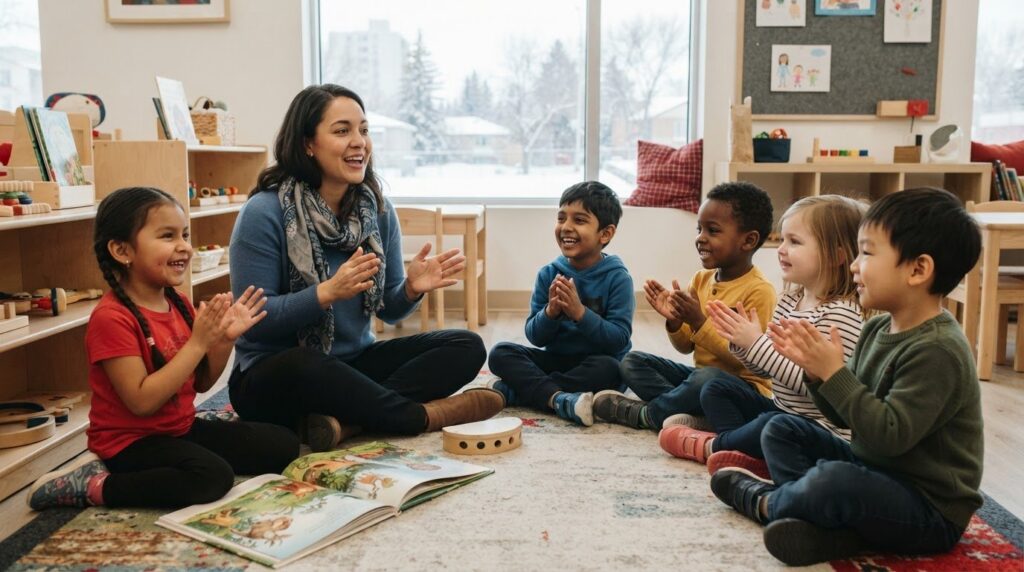
Songs and rhymes can make language practice enjoyable. They invite children to listen, join in and notice patterns in spoken words. In an early reading program, these activities work best alongside clear teaching and practice matched to the child’s current skills.
Try one small sound activity
- Choose a familiar song or short rhyme.
- Repeat it together and pause for your child to join in.
- Notice a rhyming pair, such as “cat” and “hat,” without turning it into a test.
- Model the first sound in a familiar word clearly.
- Return to a favourite book or rhyme so the activity feels familiar.
Keep the activity short and responsive. If it becomes frustrating, simplify it or return another day. Shared reading and conversation in the language your family uses at home are valuable opportunities to connect and practise language.
Ask how a program teaches beyond the song
A rhyme alone does not explain a whole reading program. Ask how educators introduce letter-sound relationships, guide practice and decide what a child is ready to try next. A useful answer includes a demonstration rather than a promise that every child will read by a fixed age.
Compare the learner and the format
Explain what you have noticed: enjoyment of stories, interest in letters, difficulty joining a rhyme or readiness for more guided practice. Ask about the age group, attendance schedule and progress updates. Broad school-readiness programs and focused reading support can have different purposes.
Early literacy at Jumpstart
Jumpstart educators model sounds carefully, explain concepts in child-friendly language and guide practice through the academy’s own curriculum. Stories, songs, movement, games and hands-on activities connect with explicit teaching and Play with Purpose. Assessments and progress updates help guide next steps.
How Jumpstart supports the next step
Jumpstart combines its own curriculum, explicit teaching and Play with Purpose. Children practise early literacy and numeracy alongside oral language, independence, classroom routines and social skills. Educators model skills clearly, guide practice and use assessments and progress updates to help plan the next steps.
- Prep Preschool, ages 3–4: a first unparented preschool experience, offered two weekdays per week.
- Scholars PreK, ages 4–5: school-readiness options with one Saturday or two, three or five weekdays per week.
- Scholars V Elite Kinder, ages 4–6: five weekdays of instruction for families seeking a more comprehensive early learning program.
Age criteria, session options and spaces must be confirmed for the selected location. Compare current Jumpstart programs.
