

What if your child’s first “report card” wasn’t a measure of their performance, but a window into how they experience the world? It’s natural to feel a flutter of anxiety when you receive preschool progress reports for parents. You might find yourself searching for academic markers while wondering if play-based observations truly capture your child’s potential. Perhaps you’re balancing the joy of their growth with a quiet fear of developmental gaps.
We’re here to help you transform that uncertainty into confidence. This guide explains how to interpret complex milestones and use these reports as a collaborative tool to support kindergarten readiness. You’ll learn how to translate educational terminology into actionable steps at home. We’ll show you how to bridge the gap between play and structure, giving you a clear path forward that focuses on your child’s unique journey and emotional growth.
Key Takeaways
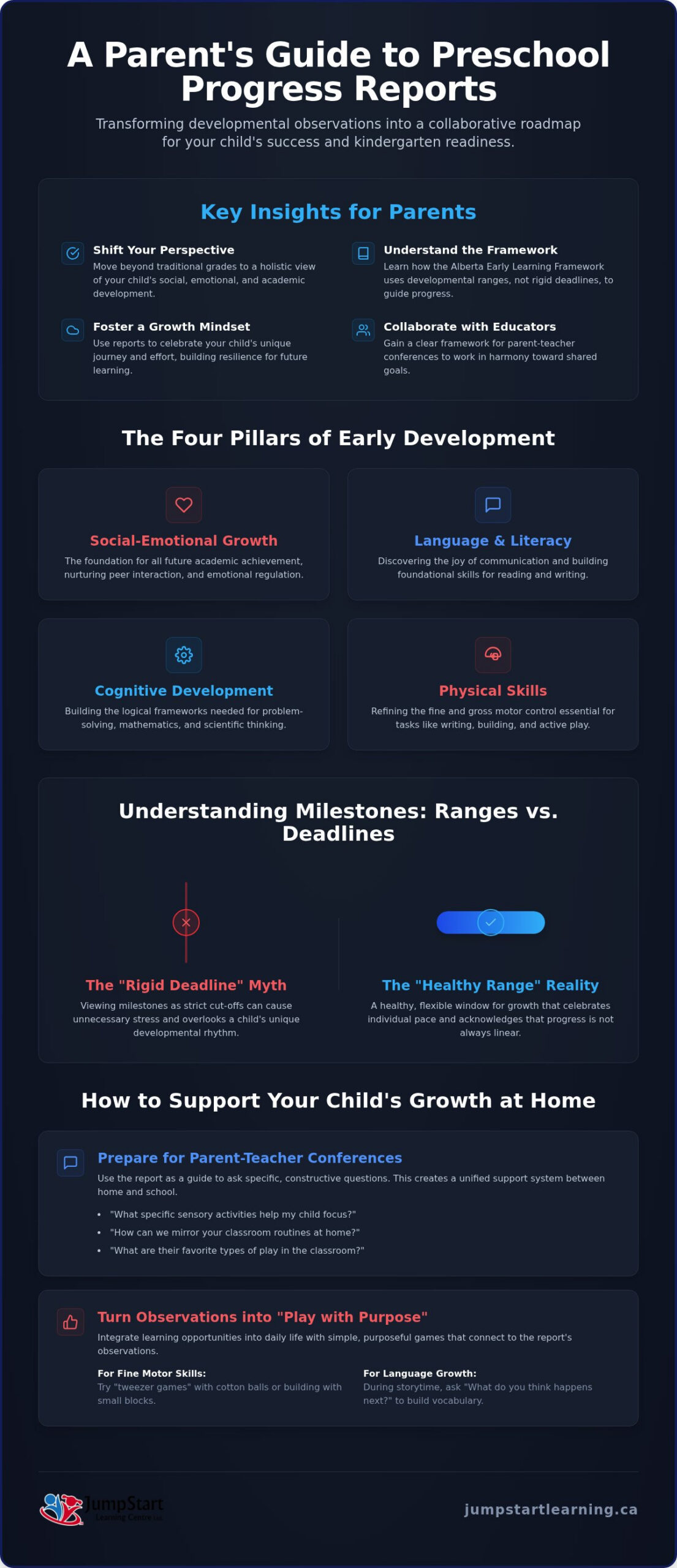
- Shift your perspective from traditional grades to a holistic view of your child’s social, emotional, and academic development.
- See how the Alberta Early Learning and Care Framework uses developmental ranges to provide a professional roadmap without the stress of rigid deadlines.
- Discover how to use preschool progress reports for parents to foster a “growth mindset” that celebrates your child’s unique learning journey.
- Gain a clear framework for your next parent-teacher conference to ensure you’re working in harmony with educators toward kindergarten readiness.
Decoding Preschool Progress Reports: What They Really Mean for Your Child
Receiving your first set of preschool progress reports for parents can feel like opening a door into a world you only see in glimpses. These documents are a holistic snapshot of social, emotional, and academic growth rather than a final judgment. We’ve shifted away from traditional grades in early childhood education because a child’s potential can’t be measured by a letter. Instead, we focus on developmental observations that capture the quiet brilliance of their unique journey.
These regular assessments serve a vital purpose. They act as a sensitive tool for identifying latent capabilities that might otherwise stay hidden during routine play. By documenting these patterns, our educators can celebrate a child’s natural strengths or identify where early intervention might provide a helpful boost. This proactive approach ensures that Pre-kindergarten programs effectively bridge the gap between early discovery and the rigors of kindergarten. If you’re ready to see how these personalized plans can transform your child’s experience, you can learn more about how to enroll in our programs.
The Four Pillars of Early Childhood Development
Our “play with purpose” philosophy ensures that every activity targets the four pillars of development simultaneously. Social-Emotional Growth is the quiet foundation upon which every future academic achievement is built. In our Edmonton and Beaumont classrooms, we nurture this alongside Language and Literacy, where children discover the joy of communication. Cognitive Development focuses on building the logical frameworks needed for math and science, while Physical Skills refine the fine motor control essential for the pencil-and-paper tasks ahead. We don’t just look for what a child knows; we look at how they learn, solve problems, and connect with others.
Understanding Milestones Within Alberta’s Learning Standards
At our Edmonton and Beaumont locations, we ground our curriculum in Alberta’s Early Learning and Care Framework. This professional standard ensures your child isn’t just “playing” but engaging in meaningful discovery. When you review preschool progress reports for parents, it’s natural to feel a surge of concern if a specific box isn’t checked yet. However, milestones are healthy ranges rather than rigid deadlines. Every child develops at their own beautiful rhythm, and a delay in one area often means they’re focusing their energy on mastering another. We use these reports to build personalized learning plans that align with provincial expectations, ensuring a confident transition to kindergarten.
Navigating Social-Emotional and Academic Benchmarks
We monitor key indicators like peer interaction, emotional regulation, and budding numeracy skills. These aren’t just academic checkboxes; they are the tools your child uses to navigate the world. Our Preschool Program (3 Year Olds) focuses on these foundational behaviors to prepare children for the more complex 4-year-old Junior Kindergarten milestones. Literacy and numeracy enrichment are integrated into every session, providing a complete developmental picture that values effort over perfection. This structured approach helps transform latent potential into visible capability. If you’re curious about your child’s specific path, feel free to discuss our personalized plans with our expert educators.
How to Support Your Child’s Growth at Home Based on Their Report
Once you’ve received preschool progress reports for parents, it’s time to shift from observation to constructive action. These documents aren’t meant to cause worry; they are tools for transformation. Start by having a “growth mindset” conversation with your child. Instead of praising a perfect drawing, celebrate the effort they put into choosing the colors or holding the crayon. This shift in focus teaches them that their unique journey matters more than a flawless result. It builds the resilience they’ll need for future academic challenges.
Use the report as a framework for your next parent-teacher conference. Come prepared with specific questions like, “What specific sensory activities help my child focus?” or “How can we mirror your classroom routines at home?” Sharing your own observations from home creates a unified support system. This collaborative spirit ensures that your child feels seen and supported in every environment. It turns a professional assessment into a shared roadmap for success. For families seeking this level of dedicated attention, Kool Kids Daycare is a great example of a provider that uses specialized infant and toddler programs to foster early growth and development.
You can easily integrate learning into daily life with simple, purposeful games. If your child’s report highlights a need for fine motor skill development, try “tweezer games” with cotton balls or building with small blocks. For language growth, use storytime to build vocabulary by asking, “What do you think happens next?” This mirrors the “play with purpose” philosophy we champion in our Edmonton classrooms. If you’d like to supplement their progress, you can enroll in our enrichment programs for targeted support in literacy and numeracy. These programs provide a structured yet joyful way to build on the foundations established in our core curriculum.
Empowering Your Child’s Educational Journey
Understanding preschool progress reports for parents is the first step in moving from uncertainty to active partnership. By viewing these assessments as a collaborative roadmap rather than a final grade, you can celebrate your child’s unique developmental rhythm. Remember that milestones are flexible ranges; every small achievement is a building block for the future. Our licensed Alberta educators are dedicated to transforming these insights into growth through personalized learning plans and our proven “Play with Purpose” curriculum. We are here to support you in bridging the gap between social discovery and academic readiness. If you’re ready to provide your child with a nurturing environment that prioritizes their emotional and cognitive well-being, secure your child’s spot in our research-based Preschool Program today. Together, we can unlock your child’s latent potential and set them on a joyful path toward lifelong learning.
Frequently Asked Questions
How often should I receive a preschool progress report?
You should typically receive a formal update two to three times during the school year. At Jumpstart Learning Academy, we provide these snapshots to track growth across several months. This frequency allows our Edmonton and Beaumont educators to observe meaningful patterns in social and academic development. Regular preschool progress reports for parents ensure that learning plans remain personalized and responsive to your child’s evolving needs.
What if my child is ‘behind’ in a specific developmental area?
Seeing a “needs improvement” marker can feel overwhelming, but it’s important to remember that milestones are healthy ranges rather than strict deadlines. If a report indicates a gap, we view it as an opportunity for transformation. Our expert educators use this data to adjust your child’s personalized learning plan, introducing specific “play with purpose” activities that turn struggles into achievements in a supportive environment.
How do progress reports help with kindergarten readiness in Alberta?
Progress reports act as a bridge to the Alberta Kindergarten curriculum by aligning early skills with provincial standards. These assessments track foundational competencies like emotional regulation and budding literacy. By identifying these capabilities early in our Edmonton classrooms, we ensure your child enters the school system with the confidence required by the Alberta Early Learning and Care Framework. This proactive alignment reduces transition anxiety.
Can a progress report identify giftedness or learning disabilities early?
Yes, these reports are essential tools for identifying latent capabilities or potential learning obstacles early. While they aren’t clinical diagnoses, they provide the documented observations needed to seek further professional evaluation. By spotting high-level cognitive patterns or persistent sensory challenges, our educators can help you access the right resources. This early identification ensures every student receives the specific support or enrichment they need to thrive. For families exploring specialized early learning environments to nurture these skills, reviewing Educational Tuition and Enrollment Fees is often an important step in choosing the right preschool or kindergarten setting.
