
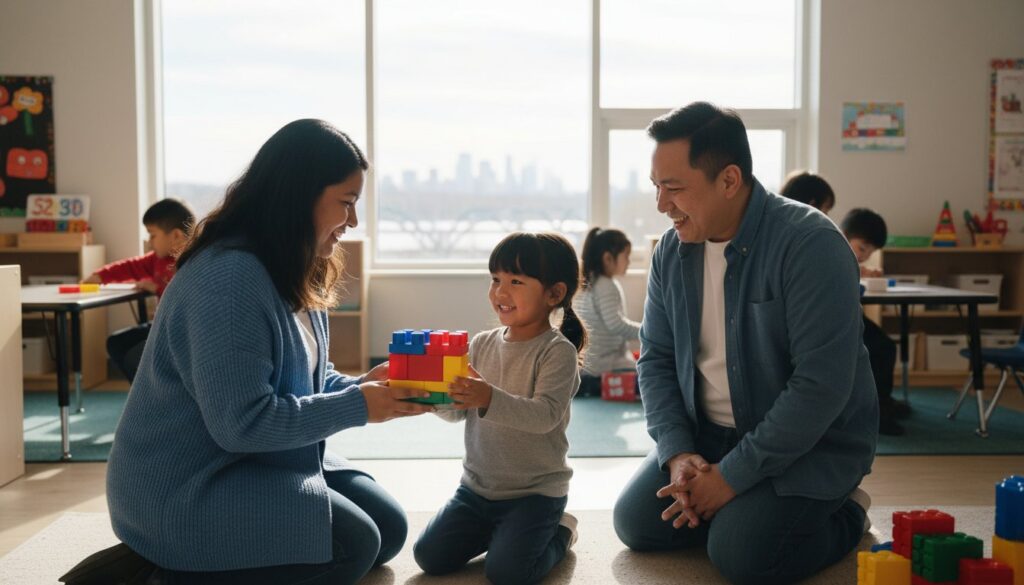
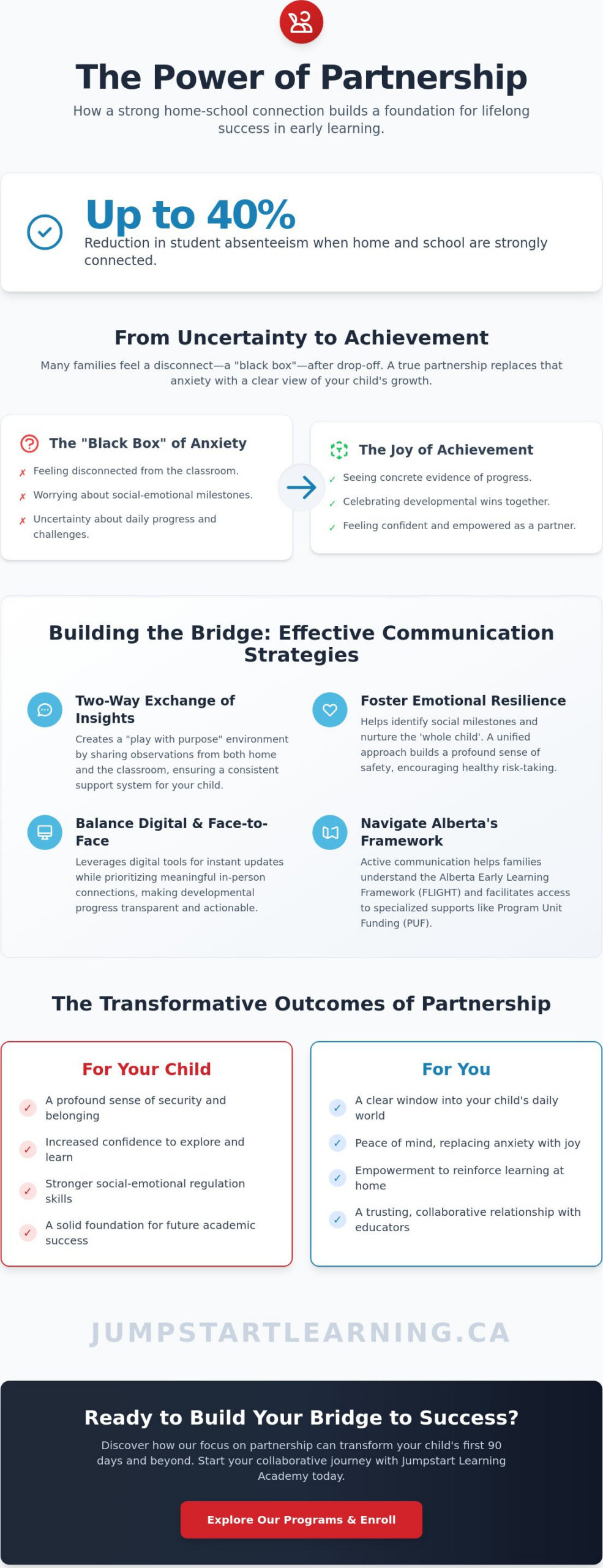
Did you know that a strong connection between home and school can reduce student absenteeism by as much as 40%? For many Edmonton families, the transition into early learning feels like a leap into the unknown. You might feel a bit disconnected from the classroom or find yourself puzzled by academic terminology used in Alberta schools. It’s natural to worry about whether your child is hitting social-emotional milestones or if they’re truly ready for the years ahead. Effective parent communication in education isn’t just about reading newsletters. It’s the foundation of a partnership that transforms your child’s learning journey from a series of tasks into a path of discovery.
We understand that you want more than just occasional updates; you want a clear window into your child’s daily progress. This guide explores how strong parent-teacher partnerships accelerate early childhood development and prepare your child for academic success in Alberta. We’ll examine the impact of recent legislation like Bill 25 on your rights, provide practical ways to support literacy at home, and show you how to build a trusting relationship with educators. Whether your child is in preschool, junior kindergarten, or preparing for kindergarten, you’ll find the tools to move from uncertainty to the joy of achievement.
Key Takeaways
- Understand how a two-way exchange of insights creates a “play with purpose” environment that bridges the gap between home and the classroom.
- Learn how consistent parent communication in education helps identify social milestones and fosters emotional resilience in young learners.
- Discover how to balance digital tools with face-to-face connection to keep your child’s developmental progress transparent and actionable.
- Navigate the Alberta Early Learning and Care Framework (FLIGHT); see how active communication facilitates access to specialized supports like Program Unit Funding (PUF).
- Explore how a nurturing bridge between home and school can replace parental anxiety with the joy of seeing your child achieve their full potential.
The Foundation of Early Learning: Why Parent Communication Matters
The transition from the quiet rhythms of home life to the structured environment of a preschool or junior kindergarten classroom is a monumental shift for both you and your child. At this stage, parent communication in education is far more than a simple exchange of logistics. It is an ongoing, two-way dialogue of insights between families and educators that ensures your child feels seen, safe, and supported. While older students can often articulate their struggles or triumphs, children between the ages of three and five are still developing the vocabulary to describe their day. This makes frequent touchpoints essential for bridging the gap between what happens at the classroom table and what happens at the dinner table.
In our “play with purpose” philosophy, every block tower and finger-painting session has a developmental goal. Without clear communication, these moments might look like simple play; with it, you see the emerging spatial reasoning and fine motor control. Engaging deeply with your child’s school helps to strengthen individual and family life by creating a unified support system. When we share these specialized pedagogical insights, we empower you to recognize and celebrate the scientific foundations of your child’s growth.
The ‘Secret Curriculum’ of Partnership
When teachers and parents align, they create a “secret curriculum” that reinforces learning goals across all environments. If we’re working on emotional regulation in the classroom, knowing you’re using the same language at home provides your child with a profound sense of security. This consistency acts as a developmental catalyst, turning the bridge between home and school into a sturdy path for growth. It ensures that the skills your child learns in our Preschool or Pre-K programs aren’t isolated incidents but become permanent parts of their toolkit.
Moving from Anxiety to Achievement
It’s common for parents to feel a “black box” sensation after dropping off their three-year-old. You wonder if they’re making friends or if they’re struggling with a new task. Regular, transparent updates peel back that curtain, offering relief from parental anxiety by providing concrete evidence of your child’s latent capabilities. You might see a photo of them leading a group activity and realize they’ve developed a spark of leadership you hadn’t seen yet.
During the first 90 days of enrollment, our focus is on building this trust. We set clear expectations: this period is about establishing routines and emotional safety. It’s a time for us to learn your child’s unique sensory preferences and for you to become comfortable with our rhythmic progression of learning. If you’re ready to start this collaborative journey, you can view our enrollment options to see how we prioritize your family’s connection to the classroom.
Beyond the Report Card: The Social-Emotional Impact of Strong Partnerships
While academic readiness often takes center stage, the emotional well-being of a three or four-year-old is the true engine of their success. You may notice your child becoming frustrated when a block tower falls or appearing hesitant when entering a group of peers. These aren’t just passing moments; they’re vital opportunities for growth that require a shared strategy between home and school. When parent communication in education prioritizes these social-emotional nuances, we move beyond simple logistical updates. We begin to build a foundation of self-regulation and resilience that serves your child long after they leave our classrooms.
A child’s confidence in the classroom is directly linked to the strength of the partnership between their parents and teachers. When a child senses that the significant adults in their life are in sync, they feel a profound sense of safety. This security allows them to take the healthy risks necessary for learning, such as trying a difficult puzzle or initiating a conversation with a new friend. By addressing the ‘whole child’ through personalized learning plans, we ensure that their internal emotional growth is nurtured alongside their literacy and numeracy skills.
Building Resilience Through Collaborative Problem-Solving
Social hurdles, like learning to navigate a shared toy or waiting for a turn, can be stressful for young learners. If a child faces these challenges without a consistent support system, they may feel overwhelmed. However, when teachers and parents align their responses, we can transform these struggles into lessons in perseverance. This alignment helps us see past a child’s immediate frustration to discover the ‘hidden strengths’ of a student who is simply learning to manage big emotions. This collaborative approach is vital for Building Resilience in Young Learners, turning potential setbacks into moments of transformation.
Tracking Social-Emotional Growth Milestones
Educators possess a unique vantage point, observing your child within the complex dynamics of a peer group. We see the subtle moments of empathy, like the first time a child offers a comforting word to a friend, or their growing ability to follow multi-step directions. These ‘soft skills’ are the primary indicators of readiness for the social rigours of a Kindergarten Program. Our reporting focuses heavily on these milestones, sharing insights into peer interactions that you might miss at home. This transparency ensures that by the time your child moves into more structured academics, they possess the quiet confidence of someone who has successfully navigated social challenges many times before. If you’re ready to see this level of personalized attention for your child, you can explore how our Junior Kindergarten and Preschool programs prioritize these essential connections.
Effective Strategies for Two-Way Communication in 2026
In the fast-paced environment of 2026, finding the time for deep, meaningful connection can feel like a challenge for even the most dedicated families. You likely balance career demands with the desire to be fully present for your child’s milestones. Effective parent communication in education recognizes this reality by offering a blend of digital efficiency and high-impact personal connection. By utilizing structured yet brief touchpoints, we can ensure that no part of your child’s development remains a mystery, even during your busiest weeks.
Meaningful communication is a two-way street. While educators provide professional observations, your insights into your child’s life at home are equally vital. If your child had a restless night or if there has been a significant change in their routine, sharing that context allows us to adjust our sensory-focused approach to meet their immediate needs. This partnership ensures that the “whole child” is supported, moving beyond academic metrics to focus on their internal emotional growth and daily well-being.
Modern Communication Tools for Busy Families
Digital portfolios and specialized apps have transformed how we share “play with purpose” moments. Instead of waiting for a quarterly meeting, you can receive real-time snapshots that illustrate the scientific foundations of your child’s activities. These tools allow you to see exactly how a creative art project is actually a lesson in fine motor precision or social cooperation. When reviewing these updates, pay close attention to progress reports regarding core competencies. For families looking to deepen this impact, our guide on Literacy and Numeracy Enrichment in Edmonton provides a roadmap for interpreting these reports and extending learning into your home environment.
The Art of the Parent-Teacher Check-In
A formal assessment or a quick morning check-in is an opportunity to refine your child’s personalized learning plan. Rather than asking general questions, try focusing on specific developmental markers. You might ask: “How does my child respond when a peer joins their play?” or “What latent capabilities are you noticing during structured literacy sessions?” These questions prompt a more detailed dialogue than a simple “How was their day?”
When sensitive topics arise, such as a struggle with self-regulation, we approach the conversation with empathy and professional rigor. We don’t just identify a hurdle; we pivot immediately to a structured remedy. Your feedback is the final piece of this puzzle. By telling us what motivates your child at home, you help us tailor our instruction to their unique personality. This collaborative rhythm lowers stress for everyone involved and provides a clear, optimistic path forward for your child’s journey through our Preschool, Junior Kindergarten, or Kindergarten programs.
Navigating Alberta’s Early Learning Landscape and Specialized Support
Alberta’s educational system is recognized globally for its rigor, yet for many families, the provincial frameworks can feel like a complex puzzle. Understanding how your child’s daily activities align with provincial expectations is the first step in becoming an effective advocate for their success. As Alberta implements new legislation like Bill 25 in 2026, the focus on meaningful parental involvement has never been higher. Proactive parent communication in education serves as your compass in this landscape, helping you navigate provincial requirements while ensuring your child’s unique journey remains the primary focus.
The transition from a home environment to a structured classroom involves more than just new routines. It requires an understanding of how localized knowledge and provincial standards intersect. Whether your child will eventually attend Edmonton Public or Catholic schools, the foundation laid in these early years determines their trajectory. We provide the transparent reporting necessary to ensure that when that transition happens, you aren’t just handing over a file; you’re passing on a comprehensive map of your child’s achievements and latent capabilities.
Alberta Standards and Your Child’s Progress
Navigating provincial frameworks like FLIGHT (Alberta’s Early Learning and Care Framework) shouldn’t feel like a solo mission. These guidelines emphasize the child as a “mighty learner,” and consistent communication is the mechanism that brings this vision to life. By decoding the terminology used in provincial assessments, we help you understand exactly where your child stands according to Alberta Early Learning Standards. This clarity is vital. It ensures that the “play with purpose” moments in our Preschool or Junior Kindergarten programs are recognized for the scientific and academic building blocks they truly are.
Advocating for Specialized Support
For some families, the path to success includes specialized interventions. If you notice your child struggling with specific social or academic hurdles, open dialogue with your centre director is the key to accessing essential resources. In Edmonton, parent communication in education is the primary driver for identifying needs that qualify for Program Unit Funding (PUF). This provincial support provides for literacy or numeracy intensives that can transform a child’s educational experience. We act as your expert mentor in this process, helping you manage the assessments and paperwork required to secure these supports. Our goal is to move your family away from the anxiety of a struggle and toward the joy of seeing your child thrive. To see how we prepare every student for these milestones, explore our Kindergarten Readiness Programs in Edmonton.
If you have questions about how these provincial standards apply to your child’s unique needs, reach out to us to discuss our enrollment options for 2026.
The Jumpstart Approach: Building a Nurturing Bridge from Home to School
Jumpstart Learning Academy believes that every child possesses a unique brilliance waiting to be discovered. Our approach to parent communication in education is built on the belief that you are the expert on your child, while we serve as your expert guides in the classroom. By weaving together your daily observations with our pedagogical expertise, we create personalized learning plans that adapt to your child’s specific sensory needs and academic pace. This isn’t just about administrative updates. It’s about a shared commitment to ‘play with purpose’, where every activity is documented and shared with you through transparent reporting that celebrates every small victory.
Our experienced educators act as dedicated advocates, ensuring that the journey toward Kindergarten readiness is steady and optimistic. We don’t just teach; we partner with you to uncover the latent capabilities within every student. This transformation happens when the bridge between home and school is strong, allowing the child to move with confidence between both worlds. Education is a human endeavor. We prioritize heart-centered, growth-oriented language to ensure you feel like a valued partner in your child’s success.
A Community-Minded Education Model
We value integrity and genuine connection over cold, corporate jargon. Our Edmonton and Beaumont locations are designed to be more than just schools; they are hubs for local parent networks. We invite you to be an active participant in our community through volunteering and special events, fostering a sense of belonging that benefits the whole family. Building these connections helps lower parental stress and creates a supportive environment for everyone. For a deeper look at how this works, read our guide on Parental Involvement in Edmonton Preschools.
Taking the Next Step Together
The process of choosing a Preschool, Junior Kindergarten, or Kindergarten program can feel overwhelming, but it doesn’t have to be. We’ve designed a guided, empathetic enrollment process to provide a clear path forward for your family. During your first personalized assessment at Jumpstart, we’ll discuss your child’s current milestones and your goals for their growth. It’s a rhythmic, unhurried conversation focused entirely on your child’s emotional and academic well-being.
If you’re ready to move away from the frustration of uncertainty and toward the joy of your child’s achievement, we’re here to help. Our programs provide the scientific and sensory-focused foundations every young learner needs to thrive in Alberta. You can secure your child’s placement for the 2026 school year today and join a community that truly values the individual journey of every student.
Empowering Your Child’s Journey Through Partnership
Building a foundation for your child’s success doesn’t happen in isolation. By understanding the Alberta educational landscape and prioritizing social-emotional growth, you’ve already taken the first step toward a transformative experience. Effective parent communication in education ensures that the “secret curriculum” of resilience and confidence stays consistent from the classroom to your living room. You now have the tools to navigate provincial standards and advocate for the specialized support your child deserves.
As a licensed early learning centre in Alberta, Jumpstart Learning Academy is here to be your reliable guide. We combine our research-based “Play with Purpose” curriculum with personalized learning plans for every student to ensure their latent capabilities are fully realized. We invite you to move away from the stress of the unknown and embrace the quiet confidence of a proven path. Enroll your child in Jumpstart Learning Academy for the 2026 school year. Your child’s individual journey of discovery is just beginning, and we are honored to walk beside you every step of the way.
Frequently Asked Questions
What is the most effective way for parents to communicate with teachers?
The most effective approach is a multi-channel strategy that combines real-time digital updates with scheduled face-to-face check-ins. This ensures you stay informed of daily “play with purpose” moments while maintaining a deep personal connection with your child’s educator. Consistency is the key to building a trusting partnership that benefits your child’s development.
How often should I expect updates from my child’s preschool teacher?
You should expect a blend of daily snapshots and more structured weekly or monthly progress reports. In our Preschool and Junior Kindergarten programs, we prioritize transparency so you never feel like your child’s day is a “black box.” These regular touchpoints help you mirror classroom goals at home and celebrate small victories as they happen.
What should I do if I have a concern about my child’s social development?
If you notice your child struggling with social hurdles, schedule a brief meeting with their teacher to share your observations from home. Educators can then cross-reference this with classroom peer interactions to create a collaborative strategy. Proactive parent communication in education helps identify hidden strengths and addresses these concerns before they become obstacles to learning.
How does parent communication affect a child’s academic performance?
Strong communication creates a unified support system that directly boosts a child’s confidence and engagement in the classroom. Research indicates that when families and schools partner effectively, students have a higher rate of success in graduating and pursuing post-secondary education. It turns the school environment into a safe space for the healthy risk-taking required for academic growth.
Can regular communication help with Kindergarten readiness in Alberta?
What questions should I ask during a preschool parent-teacher conference?
Focus your questions on developmental milestones and internal emotional growth rather than just daily activities. Ask how your child handles transitions, how they interact during group play, or what emerging capabilities the teacher has observed recently. These specific inquiries lead to more meaningful conversations about your child’s personalized learning plan and future success.
How can I stay involved if I am a working parent with a busy schedule?
Busy parents can stay deeply involved by leveraging digital portfolios and high-impact, short-form updates provided by the school. Even five minutes spent reviewing a daily photo or sending a quick note about your child’s morning can maintain the connection. Participating in local parent networks or occasional community events also fosters a sense of belonging without requiring a massive time commitment; for those interested in helping these nonprofit programs thrive, you can visit Pamela Grow for fundraising coaching.
Is digital communication through apps as effective as face-to-face meetings?
Digital tools are excellent for convenience and immediate documentation, but they should complement rather than replace face-to-face meetings. In-person conversations allow for a deeper exploration of complex developmental needs and emotional growth. Balancing both ensures that parent communication in education remains heart-centered, professional, and focused on the individual journey of every student. To make the most informed decision about your child’s early education, review the essential advantages of a preschool program as you evaluate your options for the 2026 school year.
