
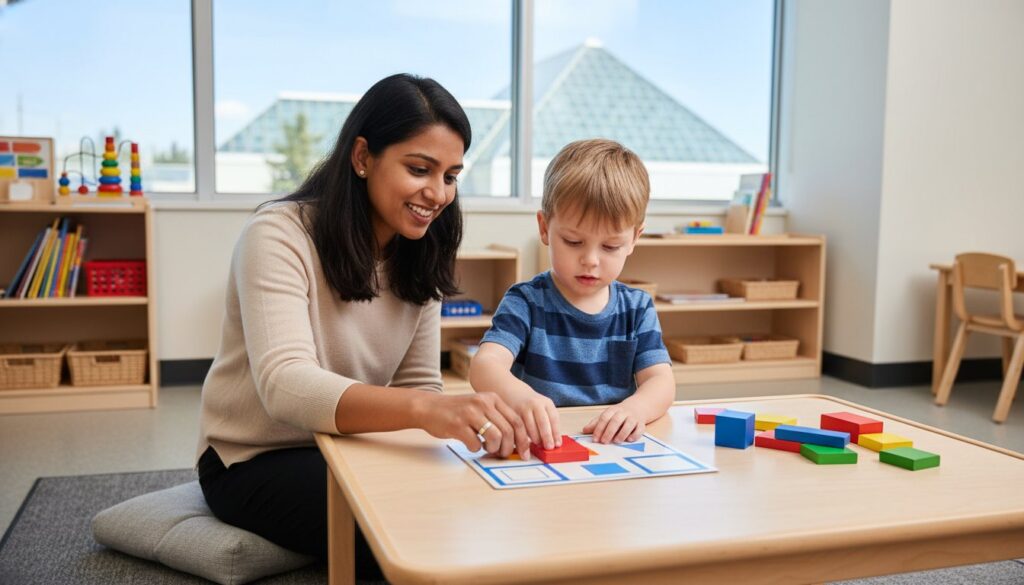
What if the gap between your child’s favorite sandbox game and their future success in grade school was smaller than you think? As an Edmonton parent, you likely feel the pressure of the 2026 enrollment surge, where over 123,000 students are projected to enter the public system. It’s natural to worry that your child might get lost in the crowd or fall behind in literacy and numeracy before they even start. You want more than just a safe place for them to stay; you want to know they’re truly ready for what comes next.
We understand that the “Flight” framework can sometimes feel abstract when you’re looking for concrete progress. That’s why personalized learning plans are so vital. These tailored strategies bridge the gap between early play and kindergarten readiness by identifying your child’s unique strengths and latent capabilities. In this guide, you’ll discover how structured enrichment transforms raw curiosity into academic confidence. We’ll provide a clear roadmap for your child’s growth, ensuring you have a dedicated partner to help navigate Alberta’s early learning standards. From our Junior Kindergarten to our specialized literacy programs, we’re here to turn your anxiety into the joy of achievement.
Key Takeaways
- Learn how personalized learning plans move beyond one-size-fits-all settings by focusing on your child’s specific literacy and numeracy needs.
- Discover the three essential assessment areas that turn early curiosity into a structured path for academic success.
- Understand how active parent-teacher communication ensures your child’s educational goals are met with consistency and care.
- Use our provided checklist to identify preschools that prioritize individual growth over a static curriculum.
- See how a tailored approach helps children overcome social and academic hurdles to arrive at kindergarten ready and confident.
Beyond the Standard Curriculum: Why Early Learning Needs Personalization
Every child arrives at preschool with a unique internal compass. Some are naturally drawn to the rhythm of numbers, while others find their voice through storytelling or sensory play. In the context of early childhood education, personalized learning isn’t a luxury; it’s a necessity. It’s the process of recognizing these individual leanings and building a curriculum that meets the child exactly where they are. Unlike a standard curriculum that moves a group of children through a checklist at the same speed, personalized learning plans act as a dynamic roadmap, adjusting in real-time to a child’s pace and interests.
Traditional daycare settings often fall into the “one-size-fits-all” trap. When caregivers are focused solely on group management and basic supervision, the specific developmental needs of an individual child can easily be overlooked. This approach can lead to a child feeling invisible or frustrated if they aren’t ready for a specific task, or bored if they’ve already mastered it. Between the ages of 3 and 5, a child’s brain is undergoing a period of intense neurological growth, forming millions of neural connections every second. Tailored instruction ensures that this window of opportunity is used to its full potential, reinforcing academic and emotional pathways through a method we call “Play with Purpose.” This delivery mechanism ensures that every game, block tower, or art project is tied to a specific developmental milestone.
The Limitations of Traditional Daycare vs. Academic Preschool
The difference between passive supervision and active, plan-driven learning is profound. While traditional daycare provides a safe environment, an academic preschool uses the Alberta Early Learning Standards as a floor rather than a ceiling. We believe social-emotional growth requires as much intentional planning as literacy or numeracy. If a child struggles to share or manage big emotions, their personalized learning plans will include specific, play-based interventions to build those skills. This structured approach moves away from simply “getting through the day” and toward a goal-oriented partnership between educators and families.
How Personalization Reduces Transition Anxiety
Transitions can be overwhelming for young learners, especially as they look toward the big leap into a primary school environment. By identifying a child’s specific triggers, such as sensory sensitivities or a need for clear routines, we can create a classroom experience that feels safe and predictable. This process often leads to the discovery of latent capabilities, those hidden talents that only emerge when a child feels truly supported. By addressing individual needs early, these plans ensure your child enters Grade 1 with the self-assurance to tackle any academic challenge.
The Anatomy of a Preschool Personalized Learning Plan
The process begins with a comprehensive initial assessment. We look closely at literacy, numeracy, and fine motor skills, but we also dive deeper into sensory foundations. Research into high-quality early learning programs highlights that a child’s environment and sensory processing are fundamental to their ability to learn. For a 3-year-old in our Preschool Program, a goal might focus on sensory exploration and following two-step directions. By the time they reach our Kindergarten Program at age 5, those goals shift toward “structured academic” targets like phonemic awareness and complex problem solving. This sequential growth ensures no child is pushed too fast or held back by a generic curriculum.
Assessing the Whole Child: Literacy, Numeracy, and Social Skills
Our educators evaluate more than just ABCs and 123s. We use our framework for literacy and numeracy enrichment to pinpoint exactly where your child sits on the developmental spectrum. Beyond academics, we measure “social capital.” This involves assessing how a child interacts within a group, their ability to express empathy, and their confidence in asking for help. These observations allow us to set specific social goals that are just as vital as reading readiness. If you’re curious about how these assessments look in practice, you can view our program details to see our classroom structure.
Setting “Play with Purpose” Objectives
We believe that play is the work of childhood, but it must be play with a plan. For example, if a child’s plan identifies a need for better spatial reasoning, a simple block-building activity becomes a targeted exercise. Educators might prompt the child to replicate a specific pattern, turning a fun moment into a significant brain-building opportunity. Because children grow and change so rapidly, we update these objectives frequently. A plan that works in September is rarely sufficient by January. In our Edmonton classrooms, we use visual and sensory tracking tools to monitor this progress, ensuring that every “Play with Purpose” session moves your child closer to being kindergarten ready.
Case Study: A Journey from Assessment to Kindergarten Readiness
It’s one thing to discuss the theory of early childhood education, but it’s quite another to see it transform a child’s daily life. Many parents come to us with a familiar knot of worry. They see their child’s potential but feel frustrated when that child struggles with traditional academic milestones or social interactions. To illustrate how personalized learning plans function as a bridge to success, let’s look at the journey of Liam, a hypothetical student who joined our 3-year-old Preschool Program last autumn.
When Liam first arrived, he was remarkably shy. He often hovered on the edge of group activities and showed little interest in letter recognition, which caused his parents significant anxiety about his future “kindergarten readiness.” He didn’t need a rigid, high-pressure environment. He needed a mentor who could uncover his latent capabilities through a structured yet nurturing approach. By focusing on his specific emotional and academic needs, we were able to turn his hesitation into a genuine desire to learn.
Step 1: The Discovery Phase
Liam’s journey began with a deep-dive consultation during his initial registration. We don’t believe in generic intake forms. Instead, our educators sat down with Liam’s parents to understand what truly makes him tick. We discovered that Liam had a profound fascination with outer space. He could name every planet but struggled to recognize the letters that formed those names. In our personalized learning plans, we use these “hooks” to anchor academic concepts. By centering his literacy activities around Saturn and stars, we moved from a struggle to a shared discovery, making the learning process feel like a natural extension of his play.
Step 2: Implementation and Mastery
The “click” moment happened during a sensory-focused lesson. Liam’s teacher used a tray of “stardust” (fine sand) to help him trace the letter ‘S’ for Saturn. Because the environment felt safe and tailored to his interests, Liam felt comfortable taking the academic risk of trying something new. This success moment wasn’t just about a single letter; it was the birth of his confidence. As he mastered these initial goals, we referenced our Kindergarten Readiness Programs pillar to ensure he was hitting the right benchmarks for his age group.
By mid-year, Liam had exceeded his initial literacy targets. We didn’t let the plan sit idle. We performed a mid-year pivot, moving him from simple recognition to basic phonemic awareness. His social goals evolved too; he went from a silent observer to a child who confidently led “space missions” with his peers. Part of this transformation involved intentional work on fostering friendships in preschool, helping Liam develop the social tools he needed to move from the edges of group play to its center. Today, Liam has successfully transitioned into our Junior Kindergarten program, arriving each morning with the quiet confidence of a student who knows he belongs. His story shows that with the right partnership, the path from play to academic readiness is a joyful, structured progression.

Co-Creating Success: The Role of Edmonton Parents in the PLP
You are the primary expert on your child. While our educators bring specialized pedagogical knowledge to the classroom, your insights into your child’s temperament and history are what make personalized learning plans truly effective. We view this relationship as a dedicated partnership, moving away from the traditional “drop-off” culture toward a collaborative model. When you understand the “why” behind your child’s daily activities, the anxiety of the unknown is replaced by the quiet confidence that they are on the right path.
At Jumpstart Learning Academy, our communication rhythm is intentional and methodical. We don’t wait for parent-teacher night to discuss progress. Instead, we maintain a consistent check-in schedule that includes monthly progress snapshots and quarterly in-depth reviews. This steady flow of information ensures that you are never left wondering about your child’s development or how they are meeting Alberta’s early learning standards. Our educators act as mentors for the whole family, providing a sense of order and a clear roadmap in what can often feel like a chaotic educational landscape.
Effective Communication Strategies
Transparency is the foundation of our parental involvement strategy. We use a blend of digital apps for real-time updates, physical progress folders, and face-to-face meetings to keep you informed. These tools allow us to share those small yet significant “success moments” that might otherwise go unnoticed. Whether it’s a photo of your child finally mastering a fine motor task or a note about a social breakthrough, these updates ensure you’re always part of the journey. If you’re ready to join a community that values this level of connection, you can view our enrollment options to get started.
Bridging School and Home
Consistency between the classroom and the home environment is the fastest way to accelerate kindergarten readiness. When a child sees the same goals reinforced in different settings, their learning feels relevant and grounded. You don’t need a teaching degree to support these objectives; simple, heart-centered interactions are often the most powerful. Here are three ways to extend numeracy and literacy goals into your daily routine:
- At the Grocery Store: Ask your child to help you find “three red apples” or identify the first letter on a cereal box.
- At the Park: Count the number of steps it takes to reach the slide, or look for geometric shapes in the playground equipment.
- During Bedtime: Use metaphorical language to describe characters’ emotions, helping your child discover the internal growth of the story’s hero.
Learning obstacles are a natural part of the process, not a sign of failure. If a specific goal isn’t being met, we don’t increase the pressure. Instead, we pivot the plan. By identifying the root cause, perhaps a sensory distraction or a need for a different “hook,” we find a structured remedy that lowers stress for both the child and the parent. This transformation from struggle to achievement is the hallmark of a truly personalized approach. Social development is equally central to this process; understanding the strategies for fostering friendships in preschool can help you reinforce at home the same peer connection skills your child is building in the classroom.
Finding the Right Fit: Implementing a PLP for Your Child
Choosing the right educational path for your child is one of the most significant decisions you’ll make as a parent. In a year where Edmonton Public Schools expect a 3.8% enrollment increase, the competition for high-quality early childhood spaces is real. You aren’t just looking for a classroom; you’re looking for a community that sees your child’s unique potential. While many centers claim to offer individual attention, true personalized learning plans require a level of dedication and scientific rigor that goes beyond simple observation. It’s about moving from the frustration of a “wait and see” approach to the joy of seeing measurable, heart-centered progress.
When you tour a facility, it’s vital to distinguish between a “paper plan” and an “active plan.” A paper plan is a document that sits in a file, rarely updated or referenced. An active plan, however, is a living tool used by educators every day to guide interactions and adjust “Play with Purpose” activities. The long-term ROI of structured academics in these early years is profound. By establishing a strong foundation in literacy and numeracy now, you’re ensuring your child doesn’t just enter kindergarten, but enters it with the quiet confidence of a leader.
Questions to Ask Your Preschool Provider
To ensure your child receives the support they deserve, we recommend asking these specific questions during your tours. Understanding the full advantages of a preschool program can help you evaluate whether a provider’s approach truly aligns with your child’s developmental needs:
- How often are assessments performed? Look for a provider that updates goals frequently to match your child’s rapid development.
- How do you incorporate my child’s specific interests into the daily curriculum? A plan should use your child’s passions as a “hook” for deeper learning.
- What is the process if my child is exceeding or struggling with current goals? Ensure there is a clear protocol for pivoting the strategy without causing stress.
The Jumpstart Commitment to Your Child
At Jumpstart Learning Academy, we act as a patient, expert mentor for your family. We don’t just teach; we advocate for your child’s emotional well-being and academic success in equal measure. Our approach is designed to lower your stress levels by providing a transparent, sequential path forward. We believe that every child possesses latent capabilities waiting to be discovered through the right blend of sensory-focused play and academic enrichment. We invite you to visit our enrollment page to book a tour and see the Jumpstart difference in person. Let’s work together to turn the challenge of kindergarten readiness into a transformative journey for your child.
Start Your Child’s Journey Toward Academic Confidence
The path to kindergarten readiness doesn’t have to be paved with parental anxiety. By moving away from a one-size-fits-all model, you’re giving your child the gift of being truly seen and supported. You’ve learned how personalized learning plans act as a dynamic roadmap; they turn everyday play into intentional, brain-building moments. Whether it’s through identifying specific interests to “hook” a student or maintaining a methodical check-in schedule, the goal remains the same: a confident, happy learner who is ready for the world.
Since 2012, our licensed early learning centers in Edmonton and Beaumont have served as a steady guide for families. Our research-based “Play with Purpose” curriculum is intentionally designed to meet Alberta’s standards while honoring the individual spirit of every child. Our expert educators are ready to partner with you, ensuring your child’s latent capabilities are fully realized before they ever step into a Grade 1 classroom. We are here to help you navigate this transition with ease and optimism.
Secure your child’s spot for the 2026 school year; Register now!
Your child’s potential is a story waiting to be told. We can’t wait to help you write the first chapter together.
Frequently Asked Questions
What exactly is a personalized learning plan for a preschooler?
A personalized learning plan is a dynamic roadmap tailored to your child’s unique developmental pace and interests. It identifies specific goals in literacy, numeracy, and social-emotional growth to ensure they don’t fall behind. By moving away from a one-size-fits-all approach, these personalized learning plans allow educators to act as expert mentors. This ensures every game and activity serves a specific purpose in your child’s transformation.
Is my 3-year-old child too young for a structured learning plan?
Structure at age 3 is about intentionality rather than rigidity. For a child in our Preschool Program, a plan focuses on sensory foundations and the discovery of latent capabilities. It provides a sense of order that helps lower stress and builds confidence. Starting early ensures that social-emotional growth is prioritized alongside emerging academic skills, creating a sturdy foundation for all future learning.
How do teachers measure progress in a play-based environment?
Progress is measured through methodical observation and sensory-focused tracking tools. Instead of traditional testing, our educators document “success moments” during purposeful play activities. We look for specific markers like improved spatial reasoning during block play or increased social capital during group interactions. These observations are then shared with you through our consistent check-in schedule, ensuring you are always a partner in their growth.
Can a personalized learning plan help with kindergarten readiness in Alberta?
Yes, these plans are specifically designed to bridge the gap between early play and Alberta’s kindergarten standards. By aligning individual milestones with the “Flight” framework, personalized learning plans ensure your child is academically and emotionally prepared for Grade 1. This structured approach helps alleviate parental anxiety by providing a clear, visible path toward success. It transforms raw curiosity into the skills needed for a smooth transition.
What happens if my child doesn’t meet the goals in their learning plan?
We simply pivot the plan to find a new way forward without increasing pressure on the child. If a student hits a learning obstacle, it’s often a sign that we need to adjust the “hook” or sensory approach. We don’t use high-pressure tactics; instead, we offer a structured remedy that honors the child’s emotional well-being. This ensures every student continues to feel the joy of achievement at their own individual pace.
How much input do parents have in creating the learning plan?
Parents are vital partners and co-creators of their child’s success. Your insights into their temperament and interests are the backbone of the initial consultation and every subsequent update. We believe that parent-teacher communication is vital for bridging the gap between school and home. This partnership ensures that the goals we set are consistent, realistic, and deeply personal to your child’s journey.
How do personalized plans differ between Preschool and Junior Kindergarten?
Preschool plans for 3-year-olds emphasize social capital and sensory exploration. As your child moves into our Junior Kindergarten Program at age 4, the focus shifts toward more structured academic targets. These include phonemic awareness and numeracy enrichment. This sequential progression ensures they are fully prepared for the 5-year-old Kindergarten Program, moving through each stage with the quiet confidence of a student who is truly ready.
Is there an extra cost for a personalized learning plan at Jumpstart?
No, these plans are a foundational part of our educational philosophy and are included in the tuition. Every student in our Preschool, Junior Kindergarten, and Kindergarten programs receives a tailored strategy as part of their standard enrollment. It is a hallmark of our commitment to providing a professional, heart-centered partnership for every family in Edmonton and Beaumont. We believe personalized support is a necessity, not an add-on.
