
What if the perceived choice between a play-based environment and an academic one is actually a false dilemma? You might find yourself watching your child play and wondering if they’re gaining the specific skills needed to thrive in a kindergarten classroom or if they’ll feel overwhelmed by the transition. It’s natural to feel a mix of hope and anxiety as you look toward the 2026 school year, especially as you weigh the long-term advantages of preschool program enrollment against other care options. You want to ensure your child is developing at the right pace while navigating the evolving landscape of Alberta’s early learning initiatives and the provincial goal of reaching ten dollar a day care by 2027.
We understand that you want more than just a place for your child to stay; you want a launchpad for their potential. A structured early education environment bridges the gap between home and the Alberta curriculum, transforming social anxiety into genuine peer connection and confidence. In this article, we’ll explore the ten essential benefits of early enrollment and provide a concrete checklist to help you measure the true return on your educational investment. You’ll gain the clarity you need to choose a path that turns early challenges into the joy of achievement.
Key Takeaways
- Understand why the age of three represents a neurological “sweet spot” for developing executive function through intentional, licensed education.
- Learn how to transition your child from parallel play to collaborative interaction, building the social confidence needed to navigate conflict and peer relationships.
- Discover the specific advantages of preschool program enrollment for early literacy, moving beyond the alphabet to master foundational phonemic awareness.
- Use our 2026 Parent’s Checklist to verify program quality by evaluating provincial licensing, curriculum depth, and the “Play with Purpose” philosophy.
- Gain peace of mind by learning how structured programs provide a measurable return on investment for your child’s emotional and academic future.
Beyond Childcare: Understanding the Real Advantages of a Preschool Program
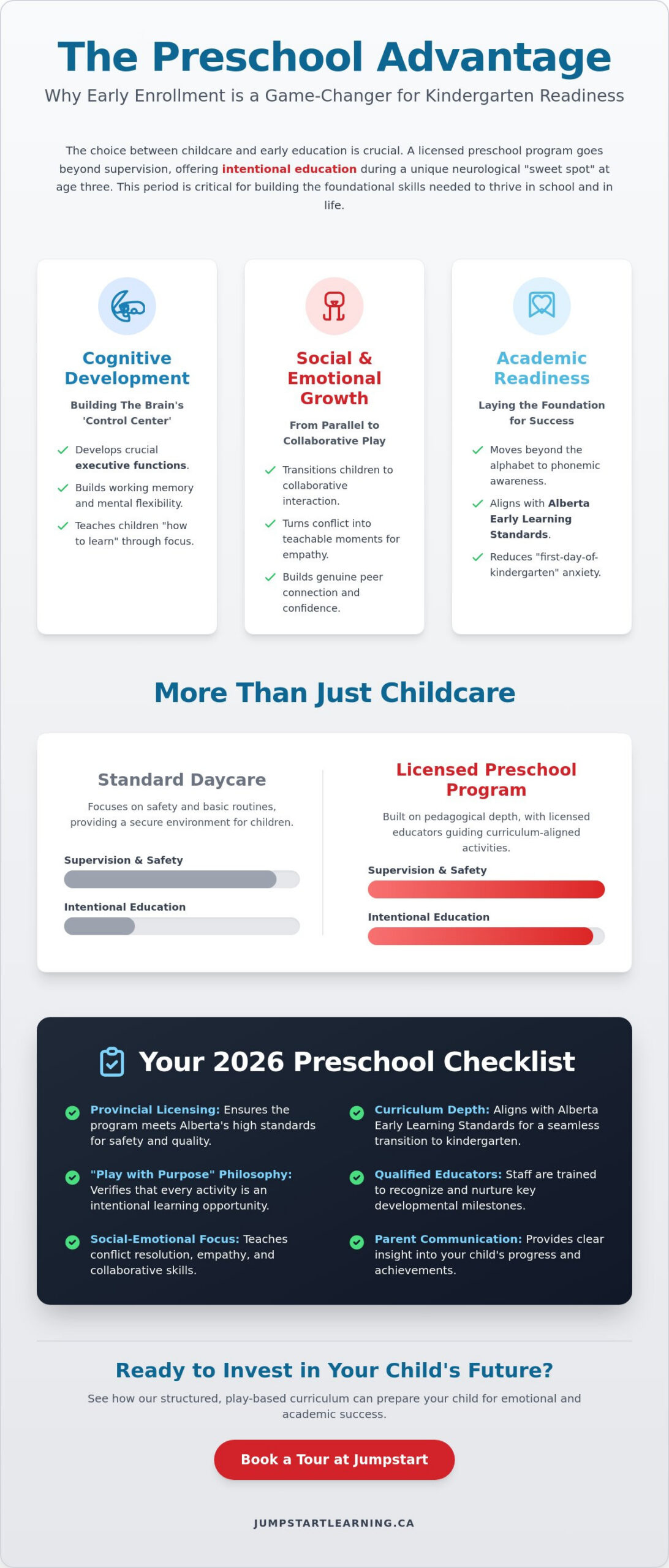
Many families begin their search for early childhood options by looking for a safe place for their child to stay while they work. However, the shift from “supervision” to “intentional education” is where the most significant transformations happen. While a standard daycare focuses on safety and basic routines, the core advantages of preschool program structures lie in their pedagogical depth. In a licensed Alberta setting, every activity is a building block designed to move a child from passive observation to active, inquisitive learning. This intentionality ensures that when your child enters a classroom, they aren’t just passing time; they’re participating in a carefully calibrated environment that mirrors the expectations of the primary grades.
The three year old brain is in a unique neurological “sweet spot.” During this window, the brain is exceptionally plastic, making it the ideal time to introduce foundational routines. For those seeking a comprehensive overview of early childhood education, it becomes clear that these early years are the most transformative for a child’s cognitive development. By exposing children to a school-like environment early, we significantly reduce the “first-day-of-kindergarten” anxiety that many families dread. Instead of facing a foreign world of desks and schedules at age five, your child enters the elementary system with a sense of belonging and familiarity.
The Alberta Early Learning Advantage
Choosing a program that aligns with the Alberta Early Learning Standards is vital for long-term success. Unlike general childcare staff, licensed educators in these programs are trained to recognize and nurture specific developmental milestones. In Edmonton, this specialized focus is particularly important for families planning to transition into the local public or separate school systems. These local programs act as a bridge, ensuring that the vocabulary, social expectations, and pre-literacy skills your child develops today are the exact ones their future kindergarten teachers will expect tomorrow.
Executive Function: The Brain’s ‘Control Center’
One of the most profound advantages of preschool program participation is the development of executive function. Executive function is the ability to manage thoughts, actions, and emotions to achieve a goal. Through structured play and sequential tasks, children build working memory and mental flexibility. They learn “how to learn” by practicing focus and following multi-step directions before the academic pressure of Grade 1 begins. This early mastery allows them to handle the emotional and cognitive demands of a classroom without feeling overwhelmed. It’s about giving them the internal tools to stay calm, organized, and ready for discovery.
Social and Emotional Milestones: The Advantages of Peer Interaction
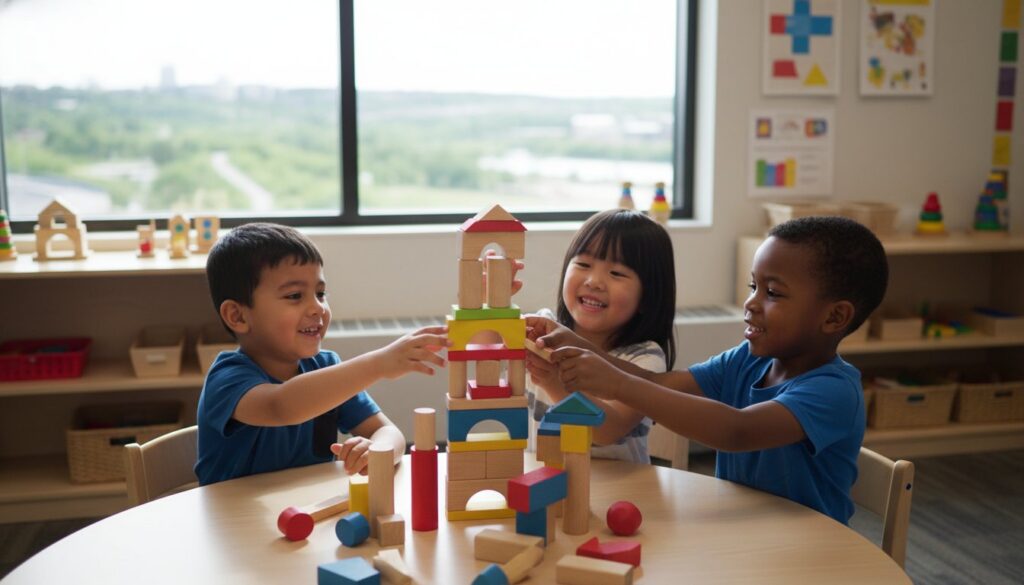
Watching your child play alongside other children without actually interacting is a phase experts call parallel play. It is a normal part of development, but the real magic happens when they begin to engage in collaborative play. One of the primary advantages of preschool program structures is that they provide the social scaffolding needed for this transition. In a supervised setting, children learn to share ideas, negotiate roles, and work toward a common goal. This isn’t just about fun; it’s about building the interpersonal toolkit they’ll use for the rest of their lives. Understanding the strategies behind fostering friendships in preschool can help parents reinforce these same collaborative skills at home, creating a consistent foundation for lasting peer connections.
Conflict is inevitable when young children interact, but in a preschool setting, these moments become teachable moments. Instead of a frustrating meltdown, a moderated environment allows an educator to guide children through resolution. They learn to voice their needs and listen to others. These foundational developmental advantages ensure that children don’t just get along, but actually understand the mechanics of empathy. This early social confidence often translates into natural leadership skills as they progress into higher grades.
Developing Emotional Intelligence (EQ)
Children often struggle with big feelings because they lack the vocabulary to describe them. A high-quality program helps them identify and name complex emotions like frustration, anticipation, or pride. By creating a nurturing space, we help build their self-esteem from the inside out. This emotional security is especially helpful when children are managing the transition away from primary caregivers for the first time. It turns a once-intimidating separation into an empowering step toward personal independence.
The Power of Group Dynamics
Learning the classroom rhythm is about more than just following rules. It involves understanding how to be part of a community. Children learn to follow multi-step directions within a group, which is a much different challenge than doing so one-on-one at home. By fostering friendships in preschool, children encounter diverse perspectives that broaden their worldview. This community-mindedness is one of the lasting advantages of preschool program participation, as it plants the seeds for cooperation in later grades. If you’re interested in seeing how these social bonds form, you can learn more about our Preschool Program and its focus on emotional growth.
Academic Readiness: How Structured Literacy and Numeracy Create Success
Many parents worry that introducing academics too early might overwhelm their child or extinguish their natural curiosity. We understand this concern. However, one of the most significant advantages of preschool program structures is the shift from rote memorization to a “Play with Purpose” philosophy. Instead of sitting at desks for hours, children engage in sensory-rich activities that naturally introduce complex concepts. This structured approach provides a predictable framework, which actually reduces child stress. When a child knows what to expect, they feel safe enough to take the cognitive risks necessary for learning.
Early literacy in a professional setting goes far beyond singing the ABCs. It focuses on phonemic awareness, the ability to hear and manipulate the individual sounds in words. By the time they reach kindergarten, children who have had this exposure are better equipped to decode new words. Similarly, numerical foundations are built through hands-on manipulatives. Using physical objects to represent numbers helps a child develop a “number sense,” which is the intuitive understanding of how numbers work. This isn’t about finishing worksheets; it’s about building a mental map of the world that makes future math and reading feel like a natural extension of what they already know.
The Hybrid Model: Structured Academics + Play
There’s a common myth that structure is boring for a three-year-old. In reality, children crave the order that a well-planned day provides. Our approach to Structured Academics Preschool in Edmonton: Myth vs. Reality explores how we balance high-energy physical play with focused learning blocks. By using a research-based curriculum, we ensure that every game has an educational objective. This hybrid model allows children to burn off energy while their brains are simultaneously absorbing the building blocks of academic success.
Kindergarten Readiness in Edmonton
Entering the Edmonton school system requires more than just knowing colors and shapes. Teachers look for specific self-care skills, the ability to follow instructions, and foundational literacy. A specialized preschool curriculum bridges the gap for 4 and 5-year-olds, ensuring they aren’t playing catch-up on their first day. The advantages of preschool program enrollment also include personalized learning plans. Since every child develops at a different speed, these plans allow us to challenge those who are ready while providing extra support to those who need a bit more time to find their footing.
The Ultimate Preschool Advantage Checklist: What to Look for in 2026
Selecting the right environment for your child’s early years is a significant decision that often feels overwhelming. To help you filter through the noise, we’ve distilled the core advantages of preschool program structures into a clear, actionable checklist for the 2026 school year. This list ensures your choice aligns with both your child’s developmental needs and the high standards of the Alberta education system. A high-quality program should offer more than just a safe space; it should be a partner in your child’s transformation.
- Licensed Status: Confirm the program is regulated by the province of Alberta to ensure it meets rigorous health and safety standards.
- Curriculum Depth: Look for a balance of literacy and numeracy rather than just unsupervised free play.
- Teacher Qualifications: Ensure educators have specialized training in early childhood development and a passion for mentoring young minds.
- Environment: The facility must be nurturing and specifically designed for “play with purpose” to stimulate sensory and cognitive growth.
- Communication: A quality school maintains a transparent, consistent connection with parents to share milestones and challenges.
Evaluating the ‘Kindergarten Readiness’ Factor
When touring facilities, look for kindergarten readiness programs that utilize formal assessments. These tools help identify where your child is thriving and where they might need additional support before they enter the elementary system. Some programs also offer specialized support like literacy enrichment or access to Program Unit Funding (PUF) for those who qualify. Ask for a sample daily schedule to see the balance of activity types. This transparency allows you to see exactly how the advantages of preschool program enrollment translate into daily growth and emotional security.
Local Edmonton Logistics and Trust
For busy families in Edmonton or Beaumont, location convenience is a practical necessity. However, convenience should never come at the cost of quality or safety. Verify that the school follows Alberta-specific licensing requirements and maintains strict safety protocols. Beyond the physical space, the level of parental involvement in preschool serves as a powerful metric for school quality. A school that values your input and keeps you informed is one that views education as a collaborative journey. Families specifically located in the south Edmonton area may also find it helpful to review the available preschool programs Beaumont offers, which can provide a clear roadmap for navigating local registration timelines and eligibility requirements. If you’re ready to find a program that checks every box, we invite you to explore our enrollment options and see how we support your child’s unique path.
Choosing Jumpstart Learning Academy: Your Partner in Edmonton Early Education
At Jumpstart Learning Academy, we don’t just see a classroom; we see a landscape of potential waiting to be discovered. We’ve built our Preschool Program for 3-year-olds around the core advantages of preschool program structures we’ve discussed; we ensure that every child receives the academic, social, and emotional support they deserve. Our approach is rooted in the “Play with Purpose” philosophy, where scientific rigor meets heart-centered instruction. By combining structured routines with sensory-focused exploration, we help children uncover latent capabilities they didn’t know they had. This methodical progression is designed to lower stress levels for both the child and the parent, replacing anxiety with the quiet confidence of readiness.
We understand that every child’s journey is unique. That’s why we prioritize personalized learning plans that adapt to varying developmental speeds. Whether your child is excelling in early numeracy or needs extra support navigating social anxiety, our educators act as dedicated advocates for their success. We move away from the frustration of academic struggle and toward the joy of genuine achievement. With multiple locations throughout Edmonton and Beaumont, we make it easier for local families to access high-level early education without the stress of a long commute. We’re here to turn the uncertainty of the 2026 school year into a season of transformation, providing a clear path forward in what can often feel like a chaotic educational environment.
A Nurturing Path to Kindergarten
Our Junior Kindergarten and Kindergarten programs offer a seamless, sequential progression that builds on the foundations laid in our initial preschool classes. This approach ensures that the transition to the elementary system feels like a natural next step rather than a daunting hurdle. Our educators are more than just teachers; they’re expert mentors who are deeply invested in your child’s emotional well-being. They possess the steady, optimistic personality of guides who have navigated these learning obstacles many times before. By joining our community, you’re choosing a partner that values academic excellence just as much as the internal emotional growth of every student.
Enrollment and Registration
We believe that the path to a great education should be clear and accessible. Our registration process is designed to be parent-friendly; it provides full transparency regarding our one-time registration fee and monthly tuition rates. We’re committed to helping families navigate the evolving Alberta childcare landscape with ease. We understand the importance of provincial funding goals and strive to keep our families informed of all relevant grants and subsidies that may apply to their situation. As we look toward the 2026 school year, spaces fill quickly. If you’re ready to give your child the Jumpstart advantage, you can secure your spot and enroll today. We look forward to becoming a supportive, dedicated partner in your family’s educational journey.
Empowering Your Child’s Journey Toward 2026
Choosing the right start for your child means looking beyond simple childcare to find a partner that understands the science of early development. You’ve seen how intentional literacy and numeracy enrichment, combined with social-emotional coaching, transforms a child’s natural curiosity into a lifelong love of learning. By focusing on executive function and collaborative play, you’re not just preventing them from falling behind; you’re giving them the internal tools to lead. The advantages of preschool program enrollment are clear; it is the bridge between home and the structured expectations of the Alberta curriculum.
As a Licensed Early Learning Centre trusted by Edmonton and Beaumont families since 2012, we’re dedicated to this transformation. Our research-based “Play with Purpose” curriculum ensures that every discovery is backed by pedagogical rigor and a nurturing hand. We invite you to move away from the stress of the unknown and toward the joy of your child’s achievement.
Enroll your child at Jumpstart Learning Academy today and secure their place in a community that values their individual growth. We’re here to guide you every step of the way as your child discovers just how capable they truly are.
Frequently Asked Questions
What are the primary advantages of a preschool program over home care?
The primary advantages of preschool program enrollment over home care include access to a consistent peer group and a structured environment that mimics future school settings. While home care offers comfort, a preschool provides the moderated social interaction necessary for children to move from parallel play to collaborative engagement. This setting allows children to practice conflict resolution and follow multi-step directions within a community; these are difficult milestones to replicate in a one-on-one home environment.
At what age should a child start a preschool program in Alberta?
In Alberta, children typically start a preschool program at age three. This age is considered a neurological “sweet spot” for developing executive function and early social skills. Most licensed programs in Edmonton and Beaumont are designed specifically for three-year-olds to begin their journey, followed by Junior Kindergarten at age four. Starting at this stage ensures a gentle transition away from primary caregivers before the more rigorous demands of the elementary school system begin.
How does preschool help with kindergarten readiness in Edmonton?
Preschool helps with kindergarten readiness by aligning early learning with the expectations of the Edmonton Public and Catholic school boards. It focuses on specific skills like phonemic awareness, basic numeracy, and self-care tasks such as zipping coats or opening lunchboxes. By mastering these foundational abilities early, children enter kindergarten with the confidence to focus on new academic concepts rather than struggling with the basic logistics of a classroom environment.
Is a structured academic preschool too much pressure for a 3-year-old?
A structured academic preschool doesn’t have to be high-pressure; it’s about providing a predictable framework that actually reduces child stress. Using a “Play with Purpose” philosophy, educators introduce concepts like literacy and numeracy through sensory-rich, high-energy activities rather than worksheets. This approach respects a three-year-old’s need for movement while subtly building the mental flexibility and focus required for later success. It’s about engagement, not endurance.
What is the difference between preschool and daycare in Edmonton?
The main difference lies in the shift from general supervision to intentional education. While daycare often focuses on full-day childcare and safety, a preschool program is curriculum-driven and typically follows a school-year calendar. Licensed preschools in Alberta employ educators trained specifically in early childhood pedagogy to deliver structured literacy and numeracy enrichment. This distinction ensures the environment is designed for developmental growth rather than just providing a safe place to stay during work hours.
Can preschool programs help children with social anxiety?
Preschool programs are highly effective at helping children manage social anxiety by providing a safe, moderated space for peer interaction. Educators act as mentors who guide children through the process of naming their emotions and practicing social scripts. By slowly increasing exposure to group dynamics in a nurturing environment, children build the resilience and self-esteem needed to overcome their fears. This gentle approach turns once-intimidating social situations into opportunities for genuine connection.
How do I know if a preschool program is high-quality?
You can identify a high-quality program by checking for provincial licensing and the specific qualifications of the teaching staff. A top-tier facility will have a clear, research-based curriculum that balances academics with emotional well-being. Look for a “Play with Purpose” philosophy and ask to see a daily schedule that includes dedicated time for literacy and numeracy. High-quality programs maintain transparent communication and encourage fostering friendships in preschool as a metric of their commitment to your child’s social and emotional success.
What are the long-term benefits of early literacy and numeracy enrichment?
Early literacy and numeracy enrichment provide the long-term benefit of a strong “number sense” and phonemic awareness. Children who develop these skills early are more likely to thrive in Grade 1 and beyond because they aren’t playing catch-up with foundational concepts. This early mastery allows them to tackle more complex problem-solving later in life with a sense of ease. It builds a mental map that makes future academic challenges feel like natural extensions of their existing knowledge.
