

What if the choice between a “play-based” environment and an “academic” one is actually a false dilemma that’s holding your child back from their full potential? Many Edmonton parents feel a familiar sense of anxiety as they look toward the September 2026 school year, wondering if their child is truly prepared for the transition to primary school. You want your little one to enjoy these formative years, yet you don’t want them to fall behind when they face their first classroom challenges. It’s a heavy weight to carry, but finding the right preschool curriculum shouldn’t feel like a guessing game.
We agree that your child deserves a foundation that values both their emotional well-being and their cognitive growth. This guide will show you how an evidence-based preschool curriculum prepares Edmonton children for academic success through a deliberate balance of multisensory learning and purposeful play. We’ll break down Alberta’s early learning standards and provide a clear roadmap for kindergarten readiness, helping you unlock your child’s confidence before they even step into a Grade 1 classroom.
Key Takeaways
- Understand how Alberta’s ‘Flight’ framework shapes local early learning, ensuring your child receives a high-quality education rooted in provincial standards.
- Discover how a research-based preschool curriculum balances core literacy and numeracy with the social-emotional growth needed for a confident start in kindergarten.
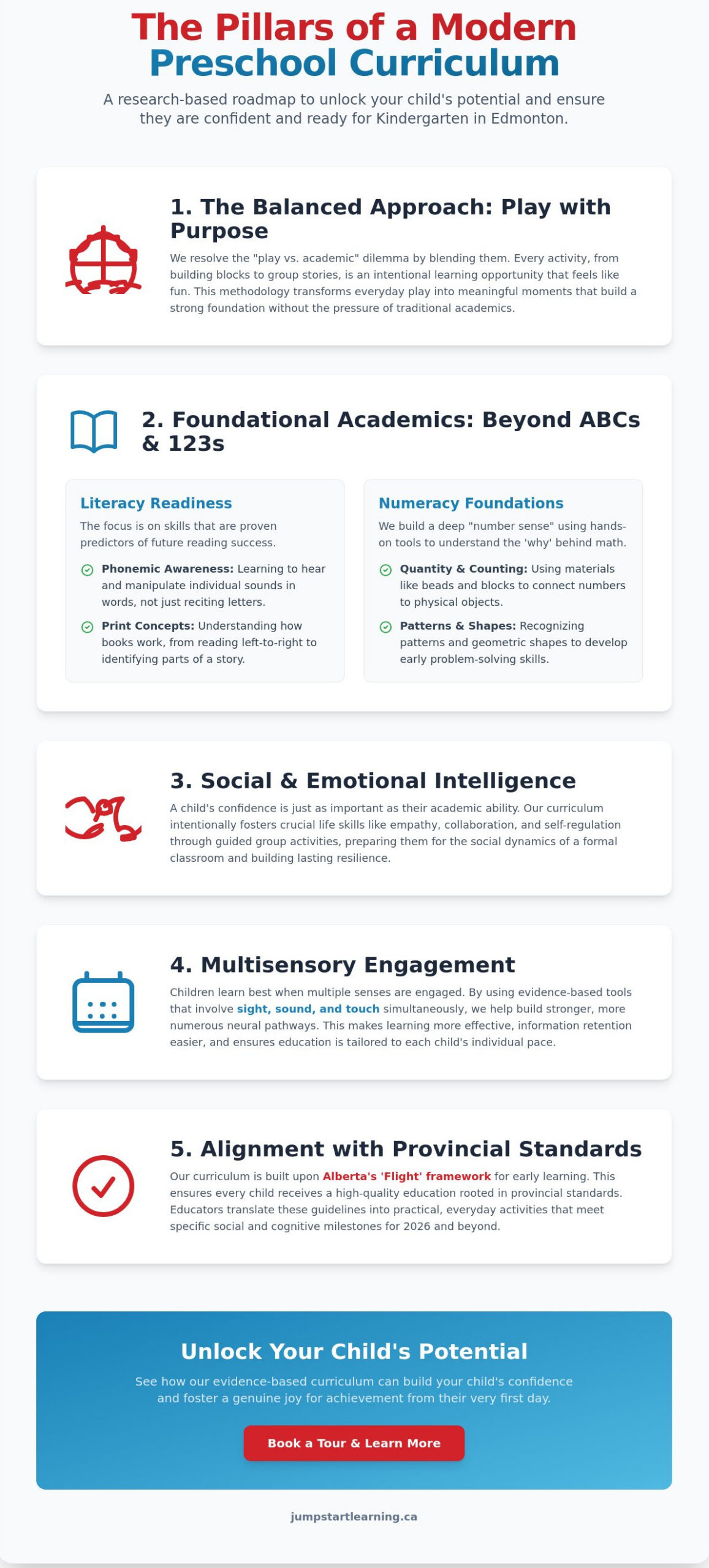
- Learn to identify “Play with Purpose,” a methodology that transforms everyday activities into meaningful learning moments while relieving the pressure of traditional academics.
- Gain the expert insights needed to evaluate kindergarten readiness and learn the specific questions to ask when touring Edmonton preschool programs.
- Explore how multisensory, evidence-based tools can unlock your child’s hidden potential and foster a genuine joy for achievement from their very first day of school.
What is a Preschool Curriculum and Why Does It Matter in Edmonton?
A preschool curriculum is much more than a simple list of daily crafts or scheduled nap times. It’s a structured, evidence-based framework designed to nurture a child’s cognitive, social, and emotional growth during their most formative years. When you explore What is a Preschool, you’ll find it serves as the essential bridge between home life and the formal school system. In Edmonton’s 2026 educational market, parents are increasingly moving away from basic childcare. They’re seeking environments that prioritize early education to ensure their children don’t just stay safe, but actually thrive. This curriculum acts as a roadmap, guiding your child toward long-term confidence and academic potential by replacing the frustration of struggle with the joy of achievement.
For many families, the transition to preschool can feel overwhelming. You might worry if your child is ready or if they’ll keep up with their peers. A well-designed curriculum relieves this anxiety by providing a clear path forward. It focuses on unlocking a child’s hidden potential through tailored activities that build foundational literacy and numeracy skills. By establishing these habits early, Edmonton children enter kindergarten with a sense of empowerment, ready to embrace new learning challenges with a steady and optimistic mindset.
The Difference Between Daycare and Curriculum-Based Preschool
Choosing the right environment for your child is a significant decision. While traditional daycare often focuses on supervision and general play, a curriculum-based preschool in Edmonton provides a goal-oriented educational program. Every activity is intentional. Whether it’s a multisensory art project or a group story session, the focus remains on measurable developmental milestones. A licensed centre provides more than just a safe space; it offers a professional setting where educators act as mentors. You can find more details on these distinctions in our guide on Day Care vs Preschool: Understanding the Differences. This structured approach ensures that your child’s time is spent building the social resilience they’ll need for years to come.
Alberta’s Early Learning Standards for 2026
Alberta’s provincial expectations for early education have evolved to meet the needs of a changing world. By 2026, local Edmonton preschools are expected to integrate specific social and cognitive milestones into their daily classroom life. These standards move beyond simple ABCs, focusing instead on holistic growth and emotional intelligence. Understanding the Alberta early learning standards is essential for any Edmonton parent navigating preschool choices for 2026. The ‘Flight’ framework serves as Alberta’s guide for early childhood educators to co-create meaningful learning experiences that respect a child’s unique identity and play-based explorations. Edmonton teachers translate these high-level standards into practical moments, like using building blocks to teach spatial awareness or collaborative games to foster empathy. It’s a methodical approach that creates a sense of order and clarity for both the student and the parent.
The Core Pillars of a Research-Based Preschool Curriculum
Every parent wants to see their child thrive, yet it’s natural to feel a sense of worry about whether they are truly ready for the classroom. A high-quality preschool curriculum isn’t just a list of daily activities; it’s a carefully crafted roadmap designed to unlock a child’s hidden potential. We believe in using a multisensory approach that engages sight, sound, and touch simultaneously. This method is proven to help young minds retain information more effectively because it builds multiple neural pathways at once. By moving away from a one-size-fits-all model, educators can tailor learning plans to a child’s individual pace, ensuring they feel successful rather than overwhelmed.
Literacy and Numeracy: More Than Just ABCs and 123s
Early education serves as the essential building blocks for all future learning. We don’t just ask children to recite the alphabet. Instead, the focus is on phonemic awareness, which is the ability to hear and manipulate individual sounds in words. This specific skill is one of the strongest predictors of reading success in later years. Similarly, developing a strong number sense involves more than counting to ten. It requires hands-on materials, like counting beads or geometric shapes, to help children understand the “why” behind the numbers. This specialized instruction is vital because it prevents the frustration of academic struggle before it even begins. You can explore how these foundations are built in our guide to Literacy and Numeracy Enrichment.
Social-Emotional Development and Resilience
While academics are important, social-emotional growth is just as vital for a child’s long-term success. A classroom setting provides a unique opportunity to teach self-regulation, empathy, and peer cooperation. When a child learns how to share a toy or wait their turn, they are actually building the resilience needed to handle future life stresses. There’s a direct link between emotional security and the ability to absorb new information. If a child feels safe and understood, their brain is open to learning. This holistic focus is a key part of Early Childhood Services in Alberta, which recognizes that emotional well-being is the floor upon which academic achievement is built.
- Friendship Skills: Structured group work helps children learn how to communicate their needs and listen to others.
- Self-Regulation: Guided activities teach kids how to manage big emotions like frustration or excitement.
- Confidence Building: Mastering small tasks independently fosters a sense of “I can do it” that carries over into Grade 1.
By focusing on the whole child, we transform the early learning experience from a source of anxiety into a journey of empowerment. If you are looking for a supportive partner to help guide your child through these first milestones, you can explore our enrollment options to see how we can help your family find the right path forward.
Play-Based vs. Structured Academics: Finding the Edmonton Balance
Many Edmonton parents feel a familiar tug of anxiety when choosing a preschool curriculum. You might worry your child is being pushed too hard or, conversely, that they aren’t being prepared enough for the transition to Grade 1. According to a 2022 provincial study on early childhood education, nearly 60% of Alberta parents cited “kindergarten readiness” as their primary concern. This “all or nothing” mindset often creates unnecessary stress. We believe in “Play with Purpose,” a methodology backed by research that views play not as an escape from learning, but as the primary vehicle for it. In this model, structured academics act as the skeleton. They provide the strength and shape that allow creative, child-led play to thrive without collapsing into chaos. You’re not choosing between fun and facts; you’re choosing a framework where both exist together.
The Myths of Purely Play-Based Learning
It’s a common misconception that children will naturally stumble upon complex literacy skills through free play alone. While socialization is vital, “just playing” can sometimes miss critical developmental windows for phonemic awareness and multisensory engagement. If a preschool curriculum lacks intentional academic rigor, a child might enter kindergarten without the foundational tools they need to succeed. You can explore more about this in our guide on Structured Academics Preschool: Myth vs. Reality. Identifying these gaps early ensures your child doesn’t face frustration later on.
The Benefits of Structured Academic Integration
Predictable routines do more than just keep a classroom organized. For 3 and 4-year-olds, structure is a powerful tool to reduce anxiety. When a child knows what comes next, they feel safe enough to take intellectual risks. This integration also builds the physical and mental stamina required for the 6-hour school days they’ll eventually face in the Edmonton Public or Catholic school systems. By blending direct instruction with open exploration, we unlock a child’s hidden potential without overwhelming their senses. Understanding the evidence behind play-based learning in Edmonton and how it compares to structured academics can help you make a more informed decision about the right balance for your child.
Comparing Learning Approaches:
- Free Play: The teacher acts as an observer. The child experiences total autonomy and social exploration.
- Guided Play: The teacher acts as a facilitator. The child explores within a environment designed with specific learning goals.
- Structured Instruction: The teacher acts as a leader. The child focuses on direct mastery of literacy, numeracy, and fine motor skills.
The goal is a hybrid model. It’s about building confidence through achievement. When a child masters a new letter sound or counts to twenty for the first time, their self-esteem soars. That confidence then fuels their play, making their creative time more sophisticated and rewarding. It’s a cycle of growth that prepares them for the world ahead. To keep that momentum going beyond the school year, reviewing summer camp selection tips for Edmonton programs in 2026 can help ensure your child continues building on these skills during the summer months.
Evaluating a Curriculum for Kindergarten Readiness in Edmonton
Choosing the right path for your child often feels like a heavy responsibility. In Edmonton, the transition to formal schooling involves meeting specific expectations for kindergarten entry. A robust preschool curriculum should do more than just occupy a child’s time; it must actively build the cognitive and social foundations required for successful entry into formal schooling. Kindergarten programs generally look for incoming students who can follow two-step directions, recognize their printed name, and demonstrate basic emotional regulation. When you visit a local center, ask how their daily schedule mirrors the structure of a Kindergarten classroom. You want to see evidence of regular assessments and personalized learning plans that adapt as your child grows. This ensures that, regardless of which kindergarten program your child attends, they feel capable and confident on their first day. Enrolling your child in dedicated kindergarten readiness programs in Edmonton can give you the peace of mind that comes from knowing every developmental milestone is being intentionally addressed.
The Kindergarten Readiness Checklist
Preparation isn’t a single event or a final exam. It’s a multi-year journey of small wins. Physical milestones, like using safety scissors or holding a pencil with a tripod grasp, are just as vital as recognizing letters. Cognitive growth includes counting to 10 and identifying basic shapes. Independence is equally crucial; your child should practice zipping their own coat and tidying up their space. For a deeper look at these milestones, you can explore our guide on Preparing for Kindergarten in Edmonton to see how these skills align with provincial standards.
Red Flags in a Preschool’s Educational Plan
Vague learning goals are a significant warning sign. If a center cannot explain the “why” behind their activities, your child might miss out on essential developmental building blocks. A lack of transparent communication regarding your child’s progress is another red flag. You should verify that the preschool curriculum is evidence-based by asking if they incorporate proven methods like multisensory instruction. Effective programs provide a healthy mix of structured guidance and discovery. A high quality program maintains an intentional balance where teacher-led instruction introduces new concepts while child-led exploration allows those ideas to take root through play. When evaluating any Edmonton program, it helps to be familiar with the Alberta early learning standards that govern licensed early childhood programs, so you know exactly what quality benchmarks to look for. If the materials look outdated or the environment feels chaotic rather than organized, it may be time to look elsewhere. Knowing what to look for in a preschool before you begin touring Edmonton programs can help you ask the right questions and identify the environment where your child will truly thrive. Your child deserves a space where their potential is recognized and nurtured every day.
We’re here to help you find the perfect fit for your child’s unique learning style. If you’re ready to see how a structured, nurturing environment can make a difference, you can enroll in a program tailored to your child’s needs today.
The Jumpstart Approach: Play with Purpose in Edmonton
At Jumpstart Learning Academy, we understand that early education shouldn’t be a source of stress for families. Our preschool curriculum is built on the foundation of “Play with Purpose,” a philosophy where every game, song, and interaction is intentionally designed to build essential cognitive and social skills. We integrate Orton-Gillingham inspired literacy techniques into our daily routines. This means your child isn’t just memorizing letters. They’re engaging in multisensory activities that connect sounds to symbols in a way that truly sticks. This evidence-based approach ensures that even the youngest learners begin their reading journey with a sense of mastery rather than confusion.
We use personalized assessments to track every child’s progress throughout the year. These aren’t high-pressure tests; they’re gentle snapshots of growth that keep you informed and involved in your child’s unique journey. Strong parental involvement in preschool is a cornerstone of our approach, ensuring families stay connected to their child’s milestones even on the busiest days. By understanding exactly where your child stands, we create a nurturing environment where building confidence is just as vital as learning numbers. Our goal is to move away from the frustration of academic struggle toward the genuine joy of achievement. We want every student to feel empowered the moment they walk through our doors.
Tailored Learning Plans for Every Edmonton Child
Every child develops at their own pace, and our Edmonton educators are experts at bridging the gap between current skills and full potential. We don’t believe in a one-size-fits-all model. Instead, our team delivers a sophisticated preschool curriculum that adapts to the individual needs of each student. Whether a child needs more time with phonemic awareness or is ready to dive into complex storytelling, we adjust our methods accordingly. We invite you to visit our Edmonton locations to see this dynamic learning in action and meet the mentors who will guide your child’s transformation.
Start Your Child’s Journey Today
We know that Edmonton families have busy schedules, so we’ve made our registration process as straightforward as possible. Transitioning from the uncertainty of early learning struggles to the relief of seeing your child thrive starts with a single step. To understand exactly how to navigate fees, grants, and deadlines, you can review our detailed guide on the Jumpstart Academy registration process for Edmonton parents before securing your spot. You can secure your child’s spot for the 2026 school year through our streamlined online portal. It’s time to replace parental anxiety with the quiet confidence that comes from knowing your child is in capable, caring hands. We’re here to help them unlock their hidden potential and find success.
Give Your Child a Confident Start for 2026
Choosing the right preschool curriculum is one of the most impactful decisions you’ll make for your child’s early development. It’s about more than just childcare; it’s about building a foundation for lifelong confidence and curiosity. Experts at the Alberta Family Wellness Initiative highlight that 90% of a child’s brain development happens before age five. This makes these early years in Edmonton a critical window for establishing the literacy and numeracy skills needed for a smooth transition into the 2026 school year.
By prioritizing a balance of play-based discovery and evidence-based instruction, you’re ensuring your child is ready for the rigors of kindergarten. Jumpstart Learning Academy is a licensed Early Learning Centre in Edmonton that understands the weight of this responsibility. We use a research-based ‘Play with Purpose’ philosophy to turn every interaction into a meaningful learning milestone. Our educators create personalized learning plans for every child, ensuring they feel supported rather than pressured. You don’t have to navigate these educational milestones alone. Exploring effective parental involvement strategies for Edmonton preschool families can help you stay actively connected to your child’s progress throughout the year. We’re here to turn academic anxiety into the joy of achievement. Enroll your child at Jumpstart Learning Academy today and watch their hidden potential flourish. Your child’s journey toward a bright future starts with a single, confident step.
Frequently Asked Questions
What is the best preschool curriculum for a 3-year-old in Edmonton?
The best curriculum for an Edmonton 3-year-old balances social-emotional growth with foundational literacy skills. At Jumpstart Learning Academy, we prioritize an approach that aligns with Alberta’s educational standards while remaining child-centered. We focus on evidence-based methods that prepare children for the 2,000 days of learning they experience before Grade 1. This ensures your child feels confident as they transition into more structured environments.
Is a play-based curriculum better than an academic one?
A play-based learning approach in Edmonton is generally more effective than a purely academic one because it fosters organic brain development. Research from the Canadian Council on Learning indicates that children in play-oriented environments show 20% higher social competence scores than those in rigid academic settings. We integrate “Play with Purpose,” which combines exploration with specific learning targets. This ensures your child gains essential skills without the stress of premature academic pressure.
How do I know if my child is ready for kindergarten in Alberta?
In Alberta, children are eligible for kindergarten if they turn five years old on or before December 31 of the school year. Beyond age, readiness is often determined by a child’s ability to follow two-step instructions and manage basic self-care tasks. If you’re feeling anxious about this transition, we offer developmental screenings to help identify any areas where your child might need extra support before the September start date. You can also explore our dedicated kindergarten readiness programs in Edmonton to learn how structured preparation can make that first day of school a confident step forward.
What are the common themes in a preschool curriculum?
Common themes in a preschool curriculum include seasonal changes, community helpers, and foundational literacy. These themes provide a familiar framework for children to explore 12 to 15 new vocabulary words each week. By connecting lessons to the world around them, we help children build the confidence to ask questions. This structured variety keeps young learners engaged while systematically building their background knowledge for future academic success.
Does Jumpstart Learning Academy follow the Alberta ‘Flight’ framework?
Yes, Jumpstart Learning Academy follows the principles of the Alberta ‘Flight’ framework to guide our daily interactions and planning. This provincial framework emphasizes the child as a “mighty learner” and focuses on four core developmental goals. By using this evidence-based guide, we ensure our programs meet the high standards set by Alberta Education. This alignment provides a seamless transition for your child as they progress toward the primary school years.
How often are children assessed in a structured preschool program?
Children in our structured programs are assessed through daily observations and formal progress reports provided twice per year. We believe that assessment should be a supportive tool, not a source of stress for families. These check-ins allow us to tailor our instruction to your child’s specific needs. By tracking 25 distinct developmental milestones, we ensure that every student is moving toward their full potential at their own unique pace.
Can a preschool curriculum help with speech or social delays?
A structured program can support children with speech or social delays through consistent peer interaction and guided communication. Our educators use multisensory techniques that have been shown to improve language acquisition rates in 75% of early learners with mild delays. By providing a safe, nurturing environment, we help children overcome the frustration of being misunderstood. This focused support builds the social confidence they need to thrive in larger group settings.
What is ‘Play with Purpose’ and how does it differ from regular play?
‘Play with Purpose’ is a structured educational strategy that uses intentional play to reach specific developmental milestones. While regular play is often undirected, our purposeful approach involves educators setting up 5 to 7 specific learning stations designed to trigger curiosity in math or literacy. This method transforms a simple building block activity into a lesson on spatial awareness. It bridges the gap between fun and foundational learning. For families ready to take the next step, understanding the Jumpstart Academy registration process can help you secure your child’s place in a program built on this proven philosophy.
